Aerodigestive Disorder
Surgical intervention for brachycephalic obstructive airway syndrome: A rewarding skill for general practitioners
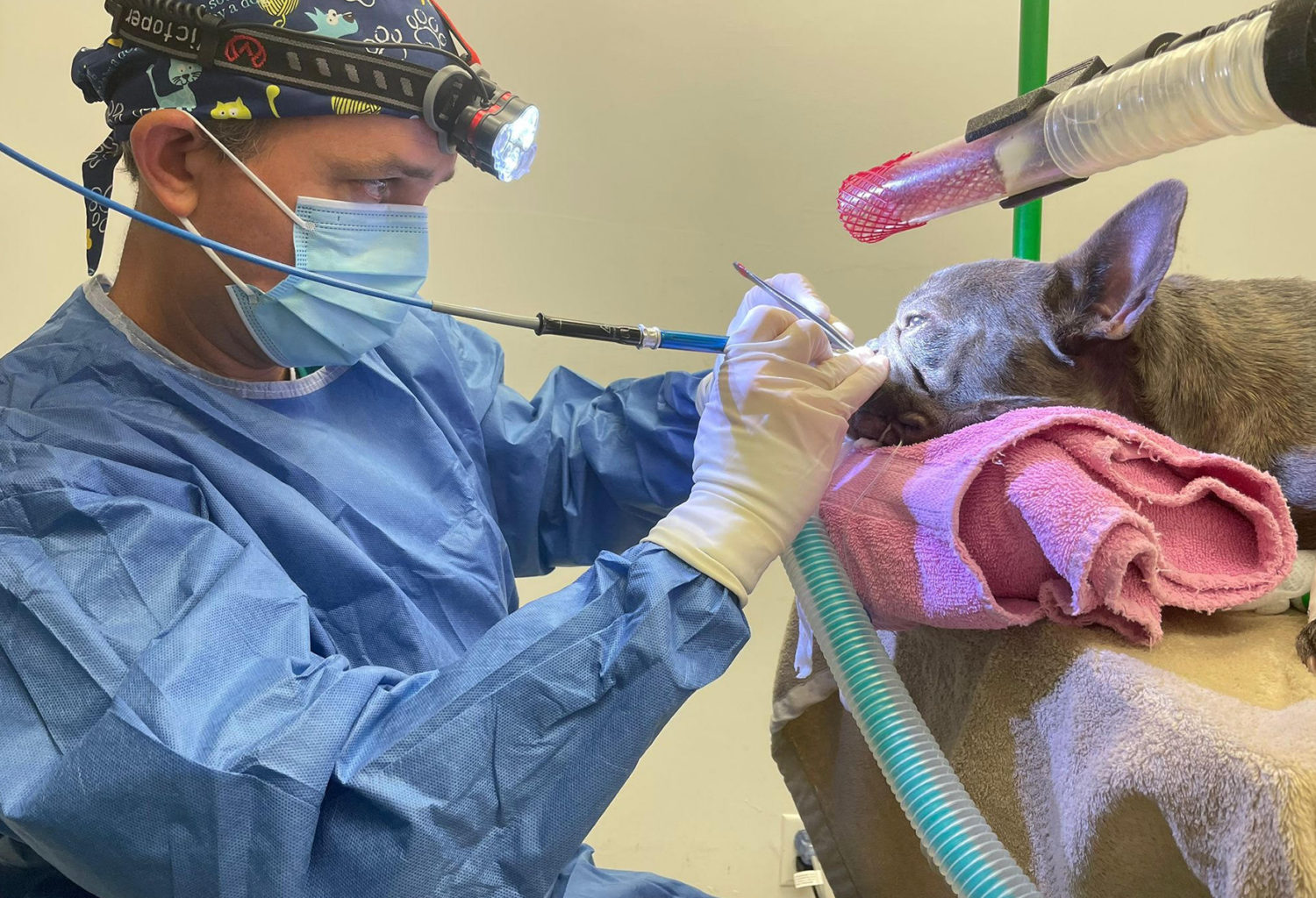
Why Boaz Man, DVM, believes we have an ethical responsibility to not only recognize a dog who can’t breathe, but to help them.
There’s no denying that brachycephalic dog breeds are in vogue throughout the world, with no signs of this trend slowing any time soon. As a result, the usually well-meaning but often unprepared owners of these smoosh-faced dogs are showing up in droves in veterinary clinics, sometimes with little understanding of the potential severity and sequelae of brachycephalic obstructive airway disease (BOAS) and the benefits of early surgical intervention.
Boaz Man, DVM, medical director of Boca Midtowne Animal Hospital in Boca Raton, Florida, feels strongly that general practitioners can and should be performing surgical procedures to treat elements of BOAS in dogs. He works hard to spread this message to not only veterinary professionals, but also to pet owners.
Advertisement
Making BOAS surgery go viral
Man recalls an experience that reinforced for him how important it was to highlight the difference that BOAS surgery can make for affected dogs. “I had posted a video on social media of a Frenchie who was struggling to breathe before surgery and then another video right after the airway surgery in which [the dog] was breathing better,” he said.
The short video went viral, and served as a reminder of the importance of sharing the benefits of BOAS surgery with others, particularly given the overwhelming popularity of breeds like French bulldogs and pugs. “It’s one thing for someone to recognize the problem,” he said, “but not everyone is aware that there is a solution.”
The need for early intervention
Veterinary professionals are well-acquainted with the plight of the brachycephalic dog, including varying degrees of trouble with movement of air and heat exchange. Over time, dogs with BOAS are at much higher risk for chronic secondary problems such as laryngeal collapse, laryngeal paralysis, everted saccules, hiatal hernias, gastroesophageal reflux, aspiration pneumonia, and inflammatory nasal polyps, among others, Man said. “It’s just one thing leads to another,” he said, “and over time it gets worse.”
Intervening early in a brachycephalic dog’s life can result in an immediate improvement in air movement for dogs and greatly reduces their risk for chronic secondary problems before they develop. Man recommends intervening when dogs are between the ages of six months and one year when possible, depending on the severity of the dog’s signs.
To help dog owners prepare financially for this, he makes a concerted effort to educate owners of affected breeds on the benefits of pet insurance at the time of their first puppy visit, with the caveat that it’s important to research policies to ensure that the policy will cover the BOAS surgery.
Why GPs must get involved
There are multiple reasons why treatment of BOAS cannot be entirely relegated to specialists, Man said. First, there is the widespread popularity of breeds like the French bulldog, who managed to end the Labrador retriever’s 30-year reign as most popular dog in the US.
“We simply cannot keep up with the Frenchie fever and all the new puppies,” Man said. There just are not enough surgical specialists to refer every affected dog for surgery.
Then, there is the cost associated with referral. While many dog owners are willing to pay exorbitant prices to purchase the dog of their dreams, fewer are comfortable with the costs of specialist care, especially if they have come to associate their dog’s BOAS signs as “normal.”
General practitioners have the advantage of seeing their patients from their very first visit, and they can spend time with clients discussing the benefits of treatment. Many clients would prefer to have treatment done by the veterinary team they already know and trust. Furthermore, said Man, with proper preparation and tools, there is no reason why general practitioners cannot perform this procedure.
How to get started
Because he has seen that many general practice veterinarians are apprehensive about performing BOAS surgery, Man has made it his mission to help teach and inspire veterinary teams to feel more comfortable with the most common procedures, which are typically nares resection and staphylectomy or palatoplasty (soft palate resection). “It’s a soft tissue surgery,” Man said. “Once you know how to remove a lump from a dog, you can do [BOAS surgery].”
Using a surgical laser is key for both procedures, according to Man, because it reduces bleeding and swelling significantly. For veterinarians who are not comfortable with surgical lasers, Man recommends learning about this technology, which can add value to many other surgical procedures in the practice.
In addition to training that is often offered by the manufacturers of surgical lasers, interested veterinarians can pursue continuing education through the American Laser Study Club, which includes the Veterinary Laser Surgery Symposium, a yearly in-person conference with multiple training labs offered.
Man is involved in many of these educational and training offerings, and he is also always open to helping general practice vets with any questions they have about the procedures or using surgical lasers in general.
Another important preparatory step is to learn how to help dog owners understand the severity of their dogs’ BOAS—and the need for intervention.
Man instructs clients to pinch their own nose closed for 30 seconds and pay attention to how much more difficult it is to breathe. When clients talk about their dogs’ “cute” snoring and hacking sounds, he points out that their dog is suffering from a respiratory obstruction. He also documents the immediate improvement in his patients’ quality of life after they have BOAS surgery and shares this widely on his clinic website and on social media.
“Providing a skill like this is going to change the life of the pet,” Man said. Once dog owners understand this, they are much more likely to get on board.
Further reading:
Addressing brachycephalic obstructive airway syndrome in general practice
New hope for farting Frenchies and burping bulldogs
Cover photo credit: Boaz Man, DVM
Disclaimer: The views expressed, and topics discussed, in any NEWStat column or article are intended to inform, educate, or entertain, and do not represent an official position by the American Animal Hospital Association (AAHA) or its Board of Directors.