Cool Cats: Summer Safety Tips for Outdoor Cats
Summer is a delightful time of year for pets and their families. However, the warm weather that brings ample opportunities for exploration and play also poses risks and challenges, particularly for outdoor pets. While cats are typically less likely than dogs to suffer from heatstroke, barn cats and other outdoor cats are susceptible to many summertime dangers. Keep your feline friend safe and healthy during the summer with the following prevention tips.
1. Provide your outdoor cat with plenty of shade and water
Unlike people, cats don’t sweat effectively enough to cool down and are more susceptible to overheating. Outdoor cats can easily suffer from heatstroke and dehydration, especially if they have no access to shade and fresh water. Additionally, cats who are overweight, thick-coated, or have heart or respiratory conditions are more likely to overheat.
Watch for the following heatstroke warning signs in your outdoor cat:
Advertisement
- Panting
- Drooling
- Lethargy
- Disorientation
- Incoordination
- Vomiting and diarrhea
- Collapse
- Seizures
Prevent your cat from overheating by:
- Providing adequate shelter — Ensure your outdoor cat has cool, shaded areas where they can escape the sun’s heat. If your cat lives in a barn, their space must be well-ventilated and not too hot.
- Increasing water supply — Always provide fresh water in bowls in multiple locations for your outdoor cat and change the water regularly to keep it cool and clean. Consider using pet fountains, which keep the water circulating and fresh and will encourage your cat to drink more.
- Grooming correctly — Regular brushing can help keep your cat cool and reduce their overheating risk by removing excess fur. However, don’t shave your outdoor cat unless they become matted, since their coat protects them from the sun and aids in body temperature regulation.
2. Protect your outdoor cat from parasites
Summer is peak season for mosquitoes, fleas, ticks, and other parasites. These pests can cause significant health issues for your cat, ranging from skin irritation and flea bite allergies to hemobartonellosis and heartworm disease. Outdoor cats are more likely to contract intestinal parasites in the summer, either by hunting and eating their prey, or through contact with a contaminated environment or feces.
Protect your outdoor cat from parasites by regularly checking for fleas, ticks, and tapeworms. Use veterinarian-recommended flea and tick preventives, and consider deworming your cat during the summer months if their parasite preventive does not contain a deworming ingredient. Keeping their living environment clean and using pet-friendly insect repellents in their bedding areas can also help.
3. Defend your cat against predators and traffic
Outdoor cats are at risk of encountering predators such as coyotes, raccoons, and birds of prey. Additionally, increased activity during the summer puts them at a higher risk of traffic accidents.
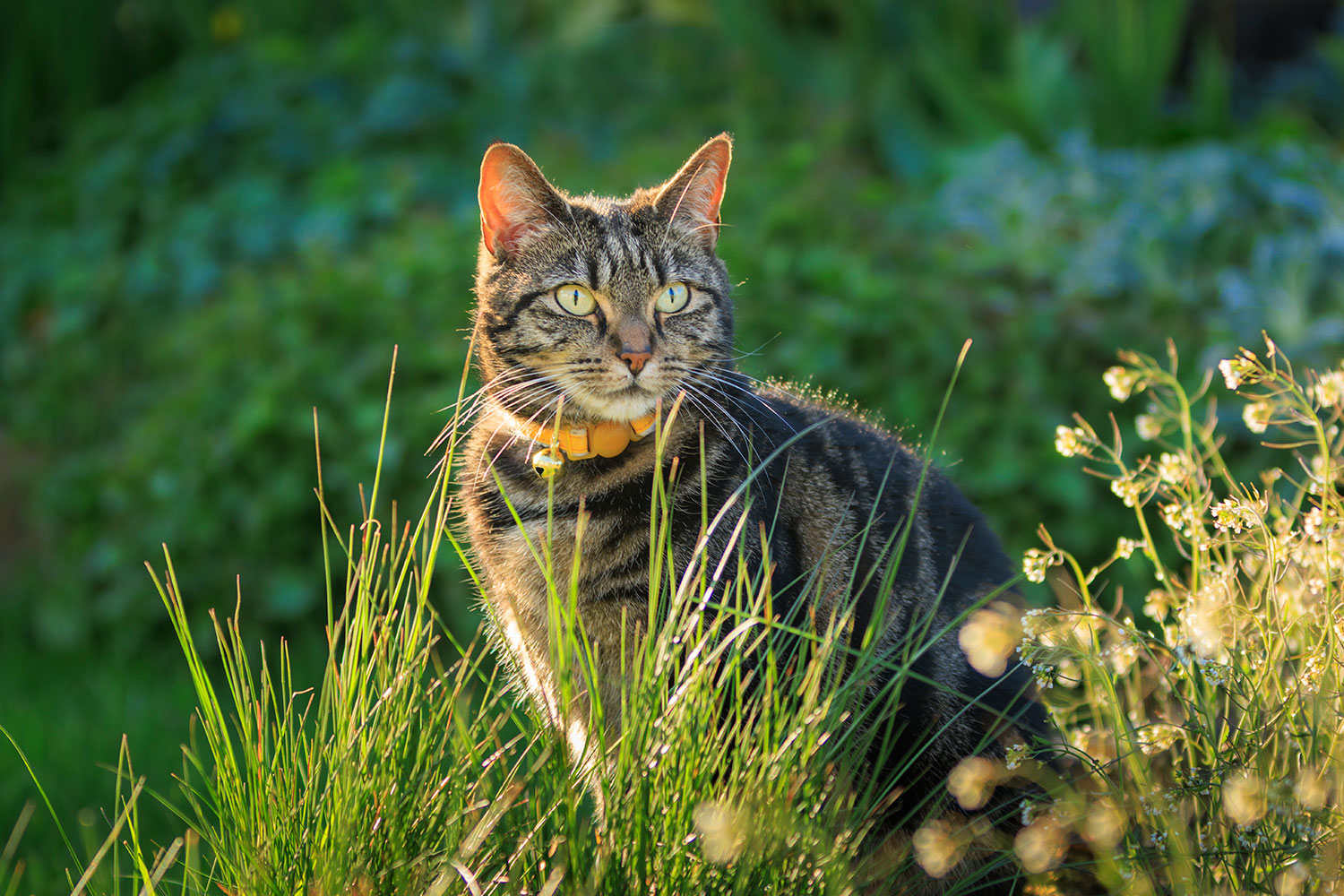
Defend your cat against outdoor hazards by providing a safe space where they can roam without encountering predators or traffic. A catio or a fenced-in space can be a secure outdoor play area. If your cat has to roam freely, attach a bell to a reflective collar to warn off potential prey and predators and alert traffic to their presence.
4. Garden with care around your cat
Many common summer plants and garden chemicals can be toxic to cats. Be aware of the plants in your garden and the substances being used to keep your cat safe.
When planning your garden or designing your flowerbeds, avoid toxic plants that can harm your cat. Lilies, azaleas, and sago palms, which are among the most common toxic plants for cats, can be deadly, and most garden chemicals and fertilizers are also toxic. Opt for feline-friendly plants and fertilizers to avoid an emergency call to a pet poison hotline.
5. Provide proper nutrition for your outdoor cat
Irregular feeding schedules or improper food storage can lead to health issues for your outdoor cat. While barn cats typically are tasked with keeping the rodent population down, they still require a balanced diet to stay healthy.
Provide your outdoor cat with good nutrition by keeping them on a regular feeding schedule and storing food properly to avoid heat spoilage. Wet food can be especially appealing and hydrating for cats during the summer, but should not be left out for too long to avoid becoming too warm, attracting insects, or becoming contaminated.
These precautions can help your outdoor cat enjoy a safe and healthy summer. In addition to providing adequate shelter and fresh water, minimizing the potential for summertime risks can help your feline friend make the most of the sunny days. However, if your cat suffers from a summer-related issue, contact your AAHA-accredited veterinarian for help.