Fluid Therapy: Webinar Recap
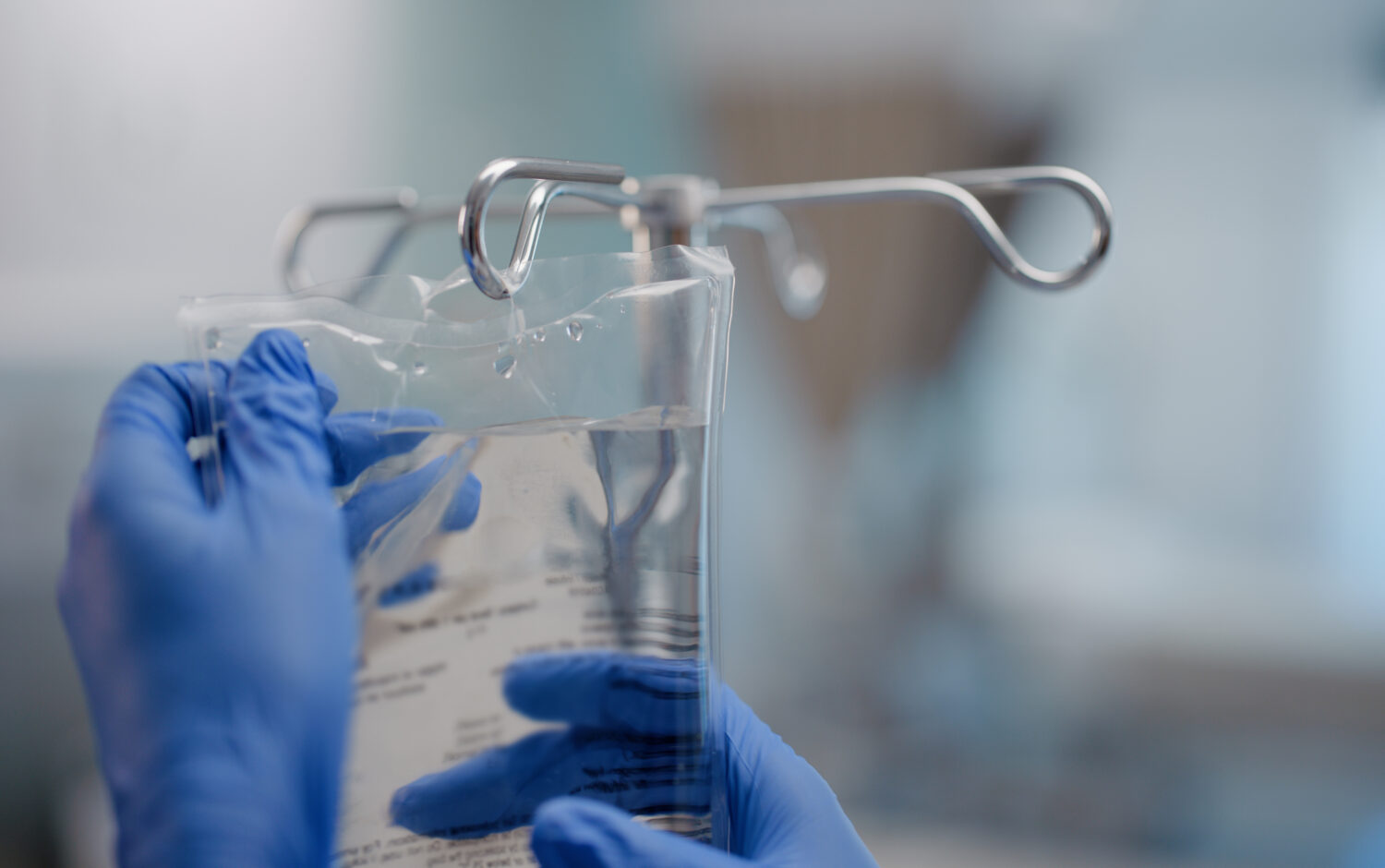
Forget twice maintenance! This webinar reviews key takeaways that will help you personalize fluid therapy to the unique needs of your patient.
Advertisement
With the recent release of the 2024 AAHA Fluid Therapy Guidelines for Dogs and Cats, participants joined Mariana Pardo, BVSc, MV, DACVECC, for an AAHA webinar entitled Fluid Therapy in Dogs and Cats. In this webinar, Pardo, a member of the Fluid Therapy Guidelines task force, reviewed important pearls of wisdom from the guidelines that can help all veterinary professionals refine and individualize their fluid therapy treatment plans for each patient. If you missed the webinar, no worries! Read on to learn Pardo’s three main takeaways from the webinar.
Compartmentalize your thinking
According to Pardo, fluid exists in the body in one of three compartments: the vascular space, which accounts for 8% of the fluid in the body, the interstitial space, which accounts for 25%, and the intracellular fluid, which accounts for the other 67% of fluid in the body. When fluid is lost, it is not always lost equally from all these compartments. For this reason, it is essential to determine which compartments are fluid-deficient (and by how much) before creating a fluid treatment plan.
Advertisement
Not all patients who are hypovolemic (meaning a fluid deficit in the vascular space) are also dehydrated (meaning a fluid deficit in the interstitial space). Likewise, not all dehydrated patients are hypovolemic (but some can be). A deficit in intracellular fluid is less common than the other two types of fluid deficits and is typically caused by severe dehydration.
Pardo explained how knowing where the location of the fluid deficit impacts the fluid therapy treatment plan for each patient.
Hypovolemia, for example, can be caused by trauma that results in extensive blood loss. Treating a hypovolemic patient who is not also dehydrated requires replacement fluids to be administered directly into the vascular space. This means that subcutaneous fluid administration would be ineffective in the treatment of hypovolemia.
Treating dehydration, such as could result from protracted vomiting and diarrhea, can also be done with intravenous fluids, but it is typically a much slower process when compared to the treatment of hypovolemia. This is because the fluid administered into the vascular space must then move to the interstitial space where the deficit is. Administering subcutaneous and enteral fluids along with or instead of IV fluids is also appropriate (if tolerated) when treating dehydration.
It’s not one-size-fits-all
It’s not just fluid route that varies based on the patient’s specific needs. Fluid rate will also vary significantly based on factors such as the patient’s age, type and degree of fluid deficit, and any comorbidities. “Twice maintenance,” Pardo says, is very rarely sufficient as a fluid rate calculation. Instead, she recommends calculating specific fluid rates for each patient and adjusting them along the way based on the patient’s response to treatment.
Pardo recommends asking the following questions:
- Is the patient in hypovolemic shock? If yes, then calculate a fluid resuscitation rate to treat this problem.
- Is the patient dehydrated? If yes, then calculate an ongoing fluid rate to rehydrate the patient and address ongoing losses.
- What is the patient’s need for maintenance fluids? It is important to include fluids the patient is receiving from any other sources, including food, water, and liquid medication, in this calculation.
Then, the resuscitation, rehydration, and maintenance fluid volumes can be added together to determine the total fluid requirement for the patient per day. Table 9 in the guidelines lists multiple formulas for calculation of these fluid rates.
Which of these formulas should be used? “We don’t know,” Pardo said, “but as long as we are calculating and reassessing the patient, which formula you use is not as important as the reassessment and changing of your fluid therapy.”
Reassessment should ideally involve evaluating physical exam parameters such as respiratory rate and effort, among others. Other modalities such as lab work, ultrasound, and radiography can be very beneficial in evaluating a patient’s hydration status and response to fluid therapy. This can allow the team to change their treatment plan when needed and identify fluid overload early.
Don’t forget about fluid overload
Some patients will be much more prone to fluid overload than others, particularly if they are very small, very young, or have comorbidities like cardiac or renal disease. Because fluid overload is not always reversible and can be fatal in severe cases, it is very important to prevent it whenever possible.
“By the time that we note clinical edema or cavitary effusions,” Pardo said, “internal edema has been present for a while and that usually has a negative impact on organ function.” This can include complications that may not appear outwardly to be related to fluid overload—things like renal damage and nonspecific gastrointestinal signs, both caused by edema in the respective organs from fluid overload.
Here are some of Pardo’s tips on preventing and treating fluid overload:
- Fluids don’t always have to be given IV! Especially in patients with comorbidities that make them more fluid-intolerant, or for patients who might otherwise need to be hospitalized for an extended period for IV fluids, enteral water administration can be a great alternative. This can be in the form of water that patients drink on their own or as water given through a feeding tube.
- Limit the total fluid volume delivered to anesthetic patients, particularly if they have procedures that last more than one hour, to not exceed 20 ml/kg/day total
- Don’t “set it and forget it”! Re-evaluate fluid therapy at regular intervals to make sure nothing needs to be changed.
- Patients should be re-weighed after removal of a large volume of fluids, an organ, or a limb so that their new fluid therapy requirements can be adjusted.
- Monitor body weight frequently throughout a patient’s hospitalization. Weight gain over 10% should raise suspicion for fluid overload.
- If fluid overload is suspected, first discontinue fluids and give oxygen if the patient is in respiratory distress.
- Increase the mobility of overhydrated patients via frequent walks to get the fluid in their body moving and help them excrete it more quickly.
- If patients are taking ACE inhibitors or angiotensin receptor blockers, discontinuing them may allow the kidneys to resolve the fluid overload on their own.
- Diuretics like furosemide can be used to attempt to reverse fluid overload in some cases, although they don’t always work. Severely fluid overloaded patients may need to be referred for hemodialysis.
- If cavitary effusions develop, they should be treated via abdominocentesis and/or
Pardo shared more examples and explanations that can help all members of the team make evidence-based decisions about the use of fluid therapy for their patients in the webinar, which can be accessed here. For a more in-depth resource on all things fluid therapy, including informative charts and calculations, refer to the 2024 AAHA Fluid Therapy Guidelines for Dogs and Cats.
Further reading:
Fluid Therapy for Dogs and Cats Webinar
Photo credit: Bevan Goldswain/E+ via Getty Images
Disclaimer: The views expressed, and topics discussed, in any NEWStat column or article are intended to inform, educate, or entertain, and do not represent an official position by the American Animal Hospital Association (AAHA) or its Board of Directors.