Culture and Wellbeing
The New Professional Attire

The work environment has not always welcomed people’s expressions of their individuality, whether it is through clothes, tattoos, or piercings. But today, in veterinary medicine, a growing number of professionals are preferring surgical scrubs to white coats or business attire, and practices are welcoming (and even embracing) artistic body expressions in their employees.
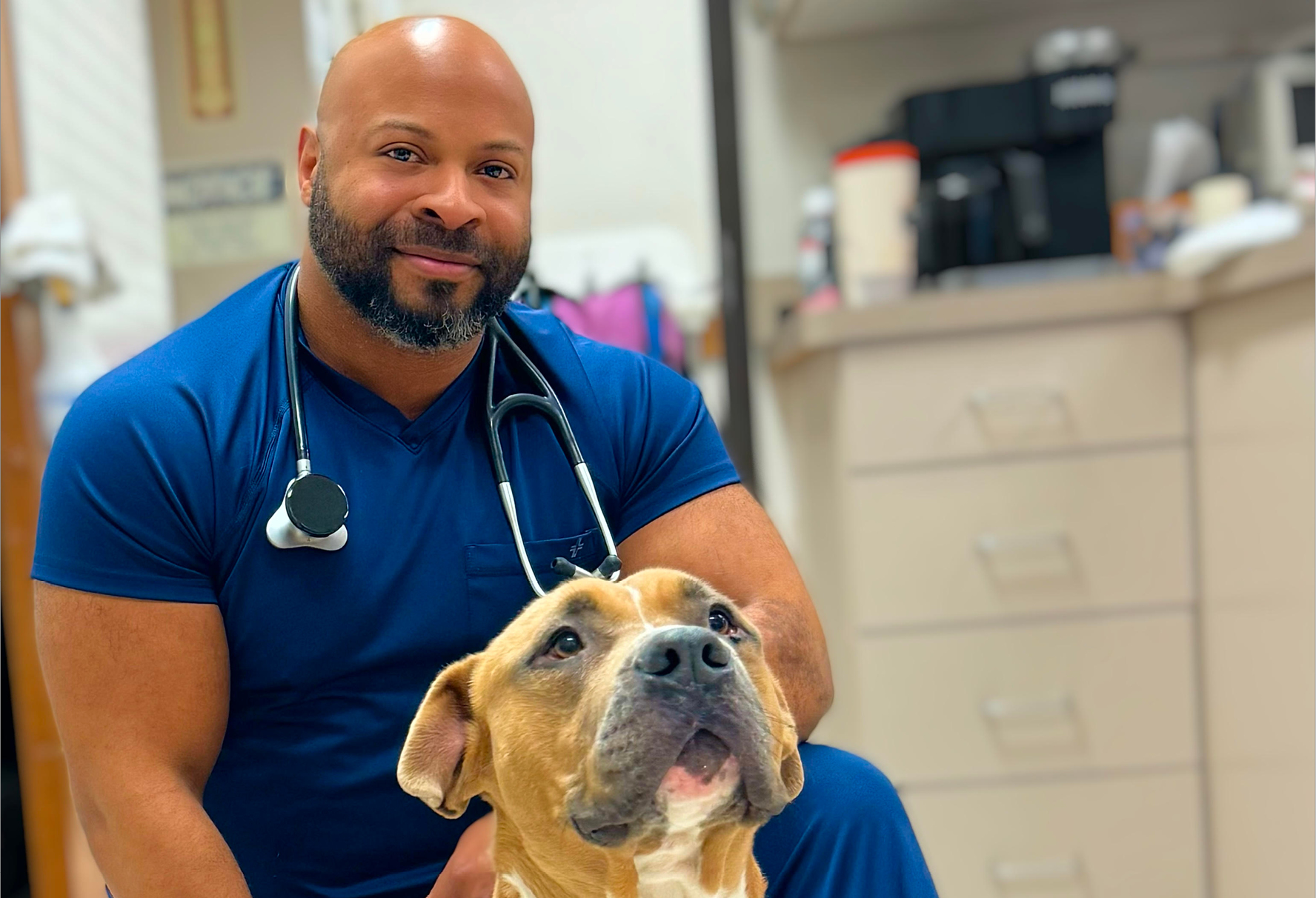
At Hall’s practice, staff are welcome to purchase their own scrubs. “As long as they are navy blue, we let the team members choose which brand and style of scrubs, allowing them to be the most comfortable at work.” Hall prefers to wear athletic scrubs made from the same material as workout attire. Though they tend to be expensive, they are lightweight, form-fitting, moisture-wicking and, best of all, comfortable. Other staff members opt for more traditional cotton scrubs.
Uniforms and Branded Attire
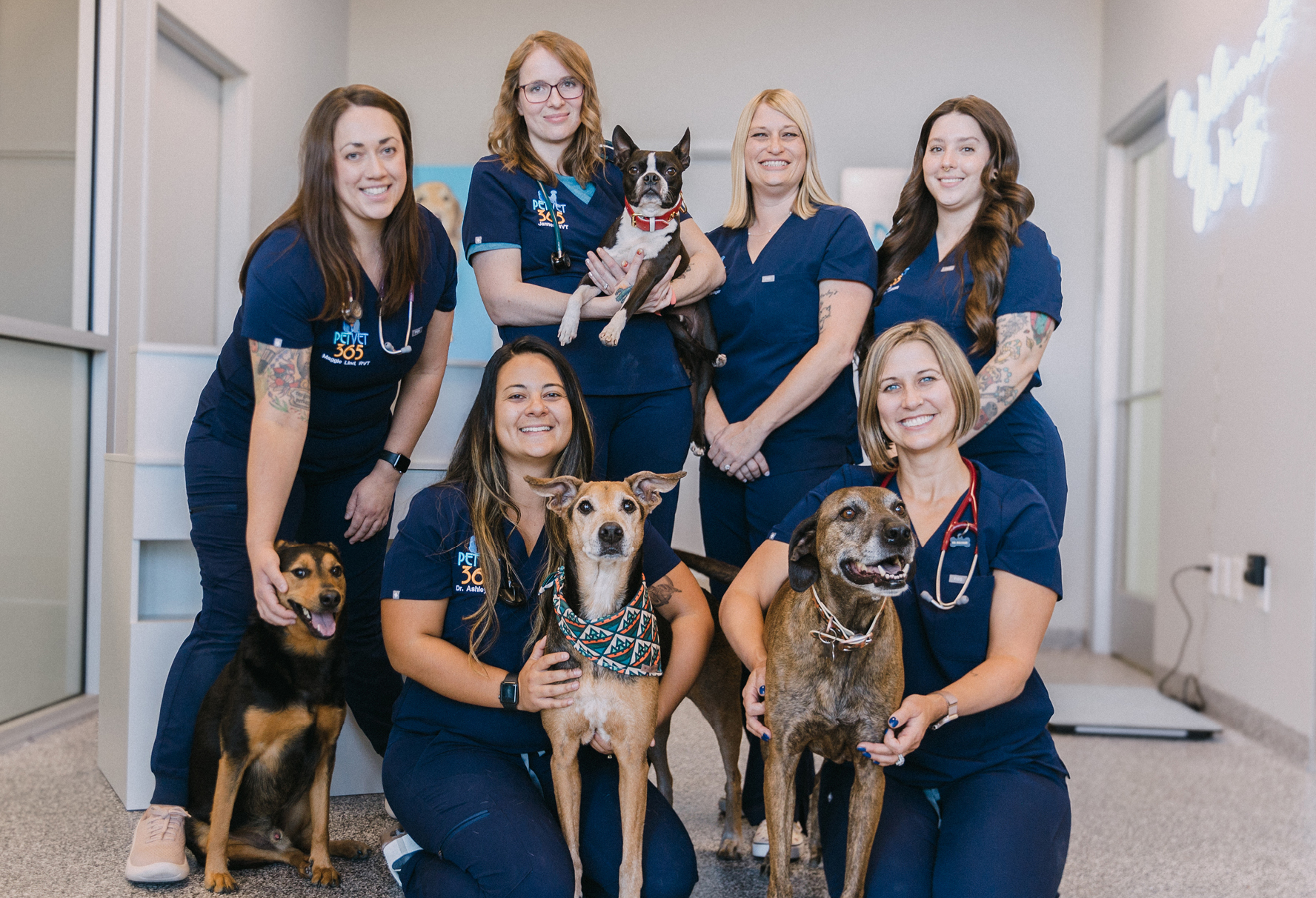
Modern scrubs are no longer shapeless and boring. Many veterinary professionals are opting for flattering, well-fitting medical scrubs that exude a polished and professional look. Some practices go so far as to have the practice’s name or their logo and the employee’s name embroidered on them, which can help establish a practice’s brand recognition and trust.
“Our clientele judge our knowledge and capabilities by our appearance. Wearing a professional and clean uniform can help us establish their trust,” says Ashley Larson, practice manager at PetVet365, a Fear Free clinic in Westminster, Colorado. Staff members wear navy blue scrubs with their names embroidered, as that helps clients know who they are talking to.
Christie Long, DVM, chief medical officer at Modern Animal, based in Culver City, California, says they strive to create a very intentional brand experience for their staff. Team members wear scrubs that are both comfortable and stylish, branded with the practice’s “M” logo on the upper left.
“We wanted our teams to feel like their clothes are stain-resistant, breathable, and durable,” Long said. Staff can also be identifiable by the color of their scrubs: Doctors wear charcoal, technicians wear ceil blue, and virtual care members wear dark blue scrubs. They receive an annual “scrub allowance” to purchase two new sets from the practice’s online store. For added comfort, staff can also choose from several Modern Animal–branded item styles, including a zip-up hoodie and pullover sweatshirt.
Our clientele judge our knowledge and capabilities by our appearance. Wearing a professional and clean uniform can help us establish their trust.Ashley Larson
Practice Manager, PetVet365
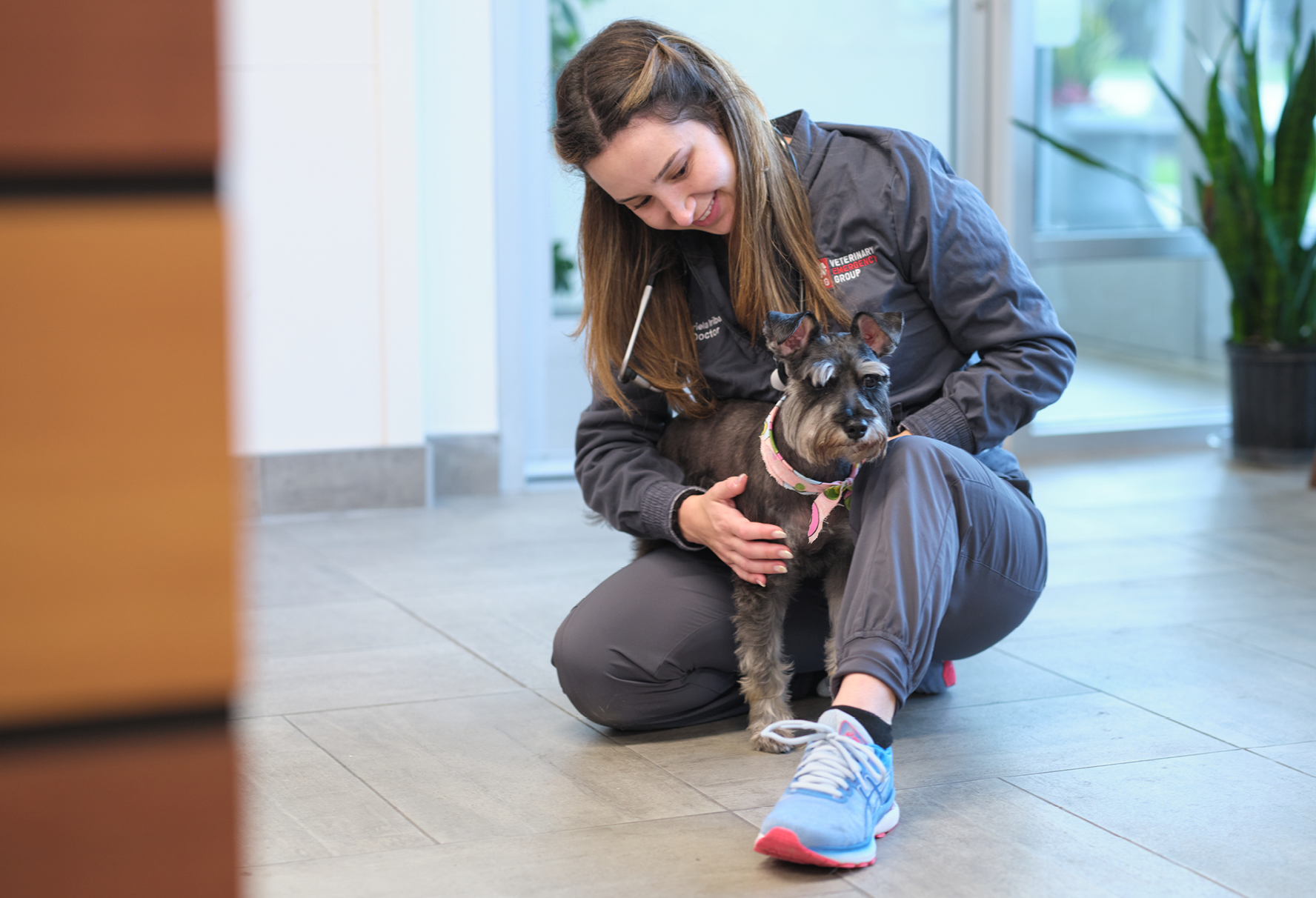
Branded medical scrubs are also the norm at Veterinary Emergency Group (VEG), where staff, fondly called VEGgies, wear charcoal gray scrubs with VEG branding. This sends a clear message to clients.
“It’s clear we’re a cohesive team working toward the same mission of helping people and their pets when they need it most,” says Anna Foster, VEG chief of staff.
More than half of the participants in the OVC study believed that healthcare professionals should wear a name tag when interacting with clients and patients. It’s crucial for VEGgies to always have their name visible to their clients, Foster said, so clients can personally thank them.
The ID is also essential for VEG because the locations feature an open-concept emergency room (ER) setting, where multiple families are in one area at any given time. Clear staff IDs allow clients to know who a VEGgie is easily. The staff also has the option to wear a VEG jacket or vest to add another layer of self-expression.
Although branded apparel has advantages, it’s not always necessary, especially for smaller clinics. Hall, of Northwest Animal Hospital, said he doesn’t believe it makes too much of a difference to have branded attire, other than the added cost of embroidering.
“Our practice brings in seven figures in revenue annually, so we are doing pretty good without a logo on our clothes,” Hall said.
In larger practices, however, clients don’t always see the same veterinarian or technician, so IDs can help clients remember their names for a more personal experience.
Emergency Room Attire
According to a study published in the Journal of the American Veterinary Medical Association, a survey of 154 clients of a small animal emergency clinic in a rural location over a month showed that clients didn’t have a preference for how a veterinarian was dressed in the emergency room. When their pet is in the ER, most people generally just want to receive help—how their doctor dresses isn’t even considered. However, most of the participants in the study said they did not want their veterinarians to wear ties or white coats.
Williams wants to see the white coat even less in the emergency room. “I can’t imagine an ER vet being able to keep it clean when such critical cases are coming in,” she said.
At VEG, Foster says scrubs allow staff to do their jobs best. “It’s like a superhero putting on their cape,” she says. “ER can get messy, it’s long hours, and there’s lots of shuffling around. VEGgies need uniforms that allow them to perform their job functions well and be comfortable.”
Piercings and Tattoos
“I don’t mind at all if vets or vet techs have visible tattoos and/or piercings—as long as my dog is happy, I’m happy,” says Miers. That’s the consensus among pet owners who were interviewed for this article. Workplaces are safe spaces where individuals can be themselves without repercussions from their employers or clients. “I prefer to support businesses allowing employees to express themselves and be who they are. I assume it’s a good workplace, and employees are happy there,” adds Miers.
As long as a person is showered, well groomed, and dressed appropriately, all other visual aesthetics are immaterial to how they perform their duties.Anthony Hall, DVM, MPH
Northwest Animal Hospital
Veterinary practices such as Northwest Animal Hospital, Modern Animal, VEG, and PetVet 365 welcome body autonomy and encourage staff to express their individuality. “Almost all of our team members have tattoos and piercings,” says PetVet365’s Larson. At Hall’s Texas practice, many staff have tattoos, visible piercings, and hair dyed in various colors. “Function is valued over fashion,” Hall states. “As long as a person is showered, well groomed, and dressed appropriately, all other visual aesthetics are immaterial to how they perform their duties.”
At Modern Animal, Long says that they do not restrict this form of expression “as long as neither distracts from their ability to perform their jobs.” The practice did a special recurring feature on Instagram called “Scratched,” featuring members of their Care Team telling stories behind their tattoos. “We are empathic by nature . . . and I believe this is just an external expression of a lot of the things we feel inside,” reads one of the Instagram posts. Modern Animal Culver City’s lead doctor, Tony Nitido, DVM, has a tattoo sleeve depicting imagery that is important to him including different animals, important dates in his life, and Asclepius, the Greek god of medicine. “They make me feel more confident about myself; they make me feel good,” he said of his tattoos.
Although tattoo and piercing culture is increasingly acceptable in the work setting, some considerations must be taken into account concerning body modifications. Some piercings could present a risk of injury if a patient were to get caught on it or accidentally tear it out. With tattoos, thought must be given to how other team members or clients could view specific imagery.
Cheyenne Rowell, a pet owner in Arizona, says she mostly doesn’t mind piercings or tattoos as she and her husband both have them, but if someone has body art that could be perceived as racist, she would be concerned as she has biracial children. “I would not want treatment to be different for my pet because they don’t like my family’s race,” she said. “I understand that some people may have changed from their past, but tattoos can be removed, covered, or altered to represent their new beliefs.”
“If we felt a tattoo would be offensive to another team member or a client, we would ask them to cover it up by wearing long sleeves under their scrubs,” says Larson. It’s important to discuss these hard things, even if they are uncomfortable, she said. “Luckily, we have not had any offensive tattoos or piercings so far.”
Photo credits: Modern Animal, Anthony Hall, PetVet365, and VEG