Clinical
Eliminating Rabies
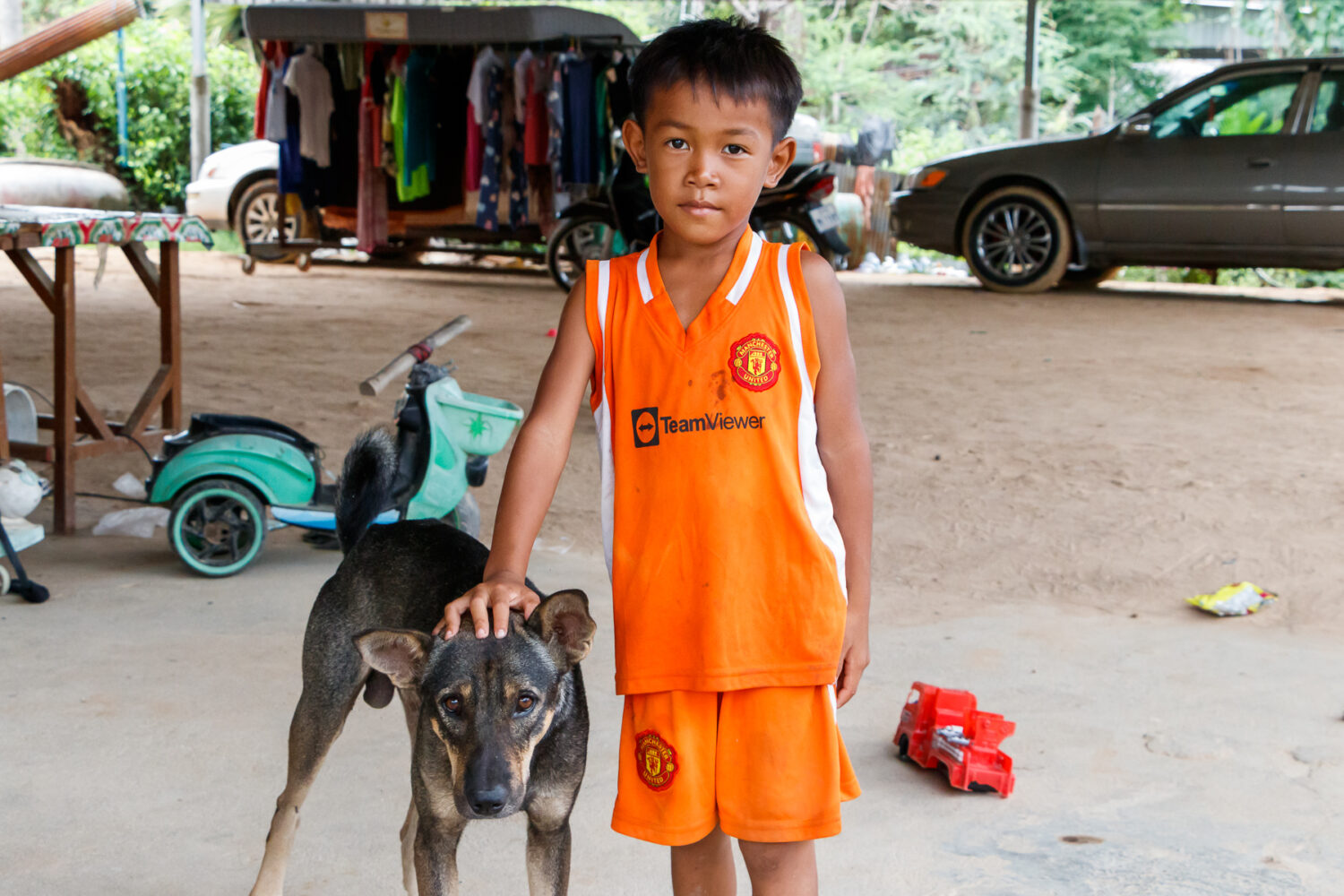
Though dog rabies is 100% preventable through vaccination, it still kills at least 59,000 people each year—including many children—almost entirely in Africa and Asia. Traveling overseas to help vaccinate dogs for rabies is a powerful way to help save the lives of humans and dogs as part of a global effort to eliminate rabies by 2030.
Fighting the Good Fight Overseas
For more than 52 years, Rob Armstrong, DVM, DVSc, has worked in veterinary medicine—a career that can still surprise him.
This February, the senior professional services veterinarian for the Pacific Northwest region of Merck Animal Health traveled to Mumbai, India, to spend a week vaccinating dogs against rabies as a volunteer with the nonprofit Mission Rabies.
Advertisement
The goal of the weeklong campaign: to be part of a team wandering the streets and trying to vaccinate at least 25,000 dogs against rabies. “It was an intense, challenging, demanding, wonderful, educational, eye-opening experience,” he said.
“You couldn’t come away from that and be the same person after that.” Each morning, Armstrong and other international volunteers woke in the “wee dawn hours,” donned yellow volunteer shirts, and shuttled to remote areas on the city outskirts in teams of five to six people.
Each group included a veterinarian, veterinary technician, a couple of locals who spoke regional dialects and languages, and a local veterinary student. While the interpreters helped explain the goal of the group of people carrying coolers and nets, the team shared informational handouts about rabies and dog bite prevention.
Whenever Armstrong vaccinated a dog, the team marked dog’s forehead with a brightly colored marker to avoid duplicating efforts. Though the team visited impoverished areas, locals often invited the volunteers inside their homes to enjoy a few minutes of shade from the heat, use the restroom, or sip a cup of tea.
“Poverty was a big part of the areas that we were in, and yet these people wanted to share,” he recalled. “Although they didn’t have the material resources, they had incredible closeness of community. They were all together and they’re rarely in a situation where they would be alone. So that was really something I learned from the whole experience.”
During the experience, Armstrong and the other Mission Rabies volunteers vaccinated more than 26,100 dogs for rabies in a single week. “It’s so good to be part of a program that is helping to protect animal and human life at the same time in a situation where there is a clear and present danger from disease for people,” he said. I
t’s not an exaggeration to call the threat of rabies a “clear and present danger.” Though rabies is 100% preventable through vaccination, at least 59,000 people die each year, almost entirely in Asia and Africa—and more than 40% are children under the age of 15, according to Fred Lohr, MRCVS, director of strategic partnerships at Mission Rabies, a nonprofit working to eliminate dog rabies worldwide.
“For every reported case, there are around a hundred cases estimated that go unreported. So the truth is, we don’t really know how many people die,” he said. “In particular, in sub-Saharan Africa and some parts of Asia— where reporting in the rural areas is nonexistent, basically—we don’t know what the actual, true burden is. But that’s part of our mission—to drill down into that and actually get to the bottom of how big of a problem it actually is.” To that end, rabies surveillance through case management is part of the nonprofit’s three-pronged approach to eliminating dog rabies, in addition to mass dog vaccination campaigns (like the one in which Armstrong participated) and educating primary school teachers and students (as well as other vulnerable populations, such as street sweepers and postal carriers in India) about rabies and prevention.
On a Mission Since its inception in 2013, Mission Rabies has vaccinated more than 3 million dogs and educated more than 7 million children. Lohr noted that the medical catchphrase, “Prevention is better than cure,” could be amended in the case of rabies to “Prevention is better than death,” since there is no cure.
“It’s the only disease we know of that has a mortality rate of 100%; if you start showing symptoms, that’s pretty much it. There’s just a handful of documented survival cases, and even in those cases, the quality of life is poor,” he said. “So it’s one of the very few opportunities where we have all the tools, we know what to do, we have an effective vaccine. It just needs to be done.”
It’s so good to be part of a program that is helping to protect animal and human life at the same time in a situation where there is a clear and present danger from disease for people.Rob Armstrong, DVM, DVSc
Mission Rabies Volunteer
Veterinarians, veterinary technicians, and nonveterinary professionals are all needed to volunteer. Sometimes, couples and entire families will volunteer on vaccination campaigns (so long as the children are at least 18 years old).
“International ‘nonvet volunteers,’ as we call them, can help with the data collection, they can help with the logistics,” he said. “Years ago, I personally was at a static point in Malawi and I singlehandedly had to vaccinate over 800 dogs in one day, so you need a good support crew literally just drawing up vaccines,” he said. “Your hands hurt at end of the day—it’s two vaccines a minute.”
It’s a small price to make a clear impact. For instance, in 2012, the hospital in the city of Blantyre in Malawi reported the highest pediatric death rate from rabies in all of Africa. So Mission Rabies operated a campaign there, and five years later, the city had the lowest number of children dying of rabies on the entire continent, as detailed in The Lancet.
Returning volunteers also often comment on the noticeable change in how locals interact with dogs. Whereas in the West dogs are often considered members of the family, it’s different in most places where dog rabies is still endemic, where they’re used primarily for security and hunting, according to Lohr.
“Year over year, you see that change in how people perceive these dogs and how people handle these dogs,” he said. “I think for a volunteer, that’s an amazing thing to see.”
International veterinarians play a significant role in educating local veterinary students during vaccination campaigns by Mission Rabies (and its parent organization, Worldwide Veterinary Service, which offers hundreds of volunteer opportunities each year, such as vaccinating wildlife against distemper in the Galapagos Islands), he noted.
For instance, during a recent rabies vaccination campaign in Cambodia, more than 200 students joined Mission Rabies vaccination teams with more than 100 international volunteers.
“These students don’t get a lot of practicals at university,” he said. “Some of them, despite being in their third or fourth year, have never even vaccinated a dog. So this was a really great opportunity for them to learn from international veterinarians.”
He hopes veterinary professionals will join the worldwide effort to eliminate dog rabies by 2030—an initiative the World Health Organization and partners dubbed “Zero by 30.”
“With rabies, we have one of the rare opportunities to actually achieve elimination of a public health threat and do massive good for the welfare of dogs around the world. Because of the disease, millions of animals are still being culled unnecessarily and cruelly every single year, and thousands of people die the most horrendous death,” Lohr said. “As a vet myself, it always brings home again why we’re actually in this profession— really seeing that change, seeing that increase in health and welfare all around.”
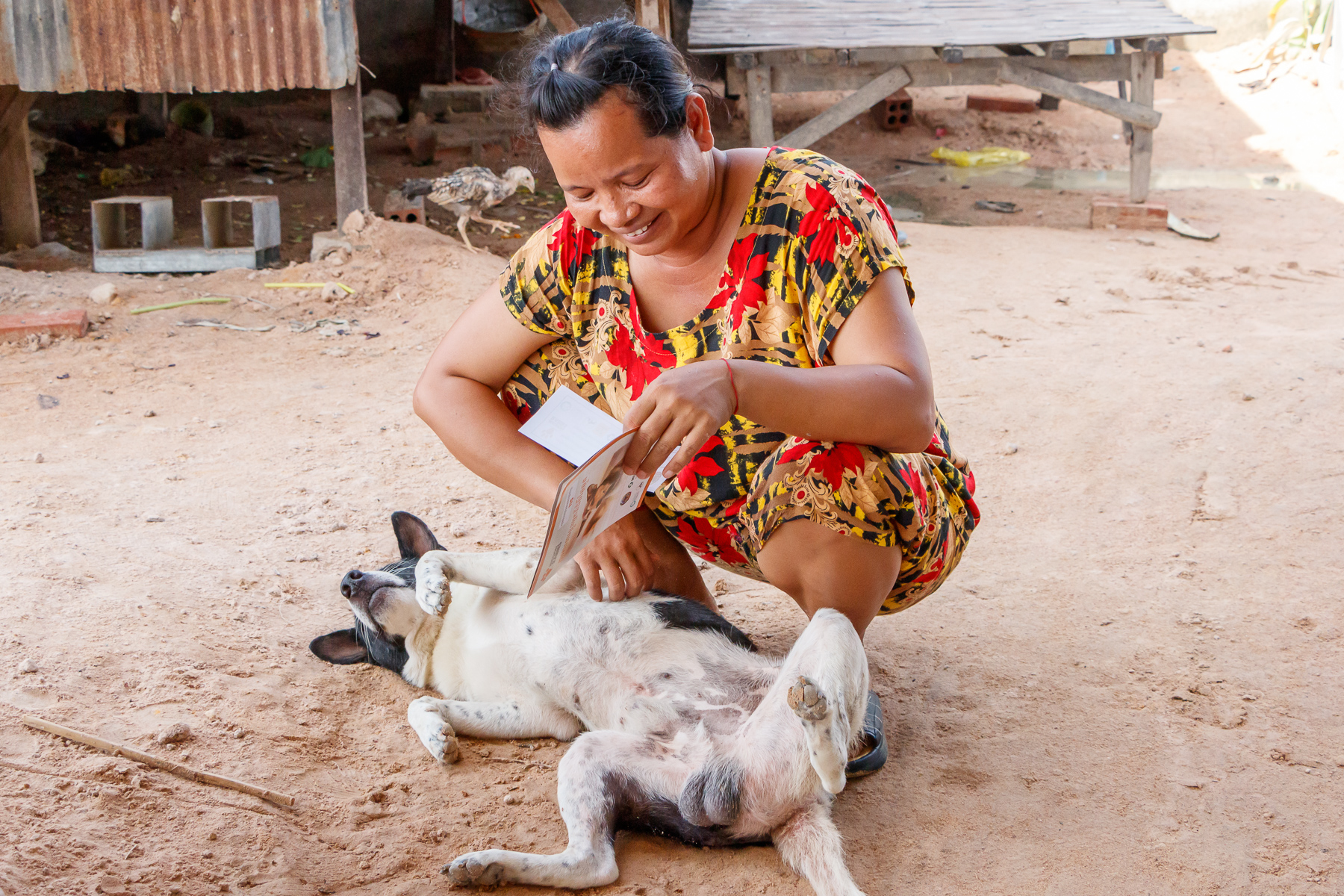
Other Ways to Help
If volunteering abroad isn’t a possibility, there are still meaningful ways to make an impact, such as donations, according to Felix Lankester, PhD, clinical associate professor at Washington State University’s Paul G. Allen School for Global Health and a director of Rabies Free Africa, a program that combines vaccine research with vaccination programs in Africa.
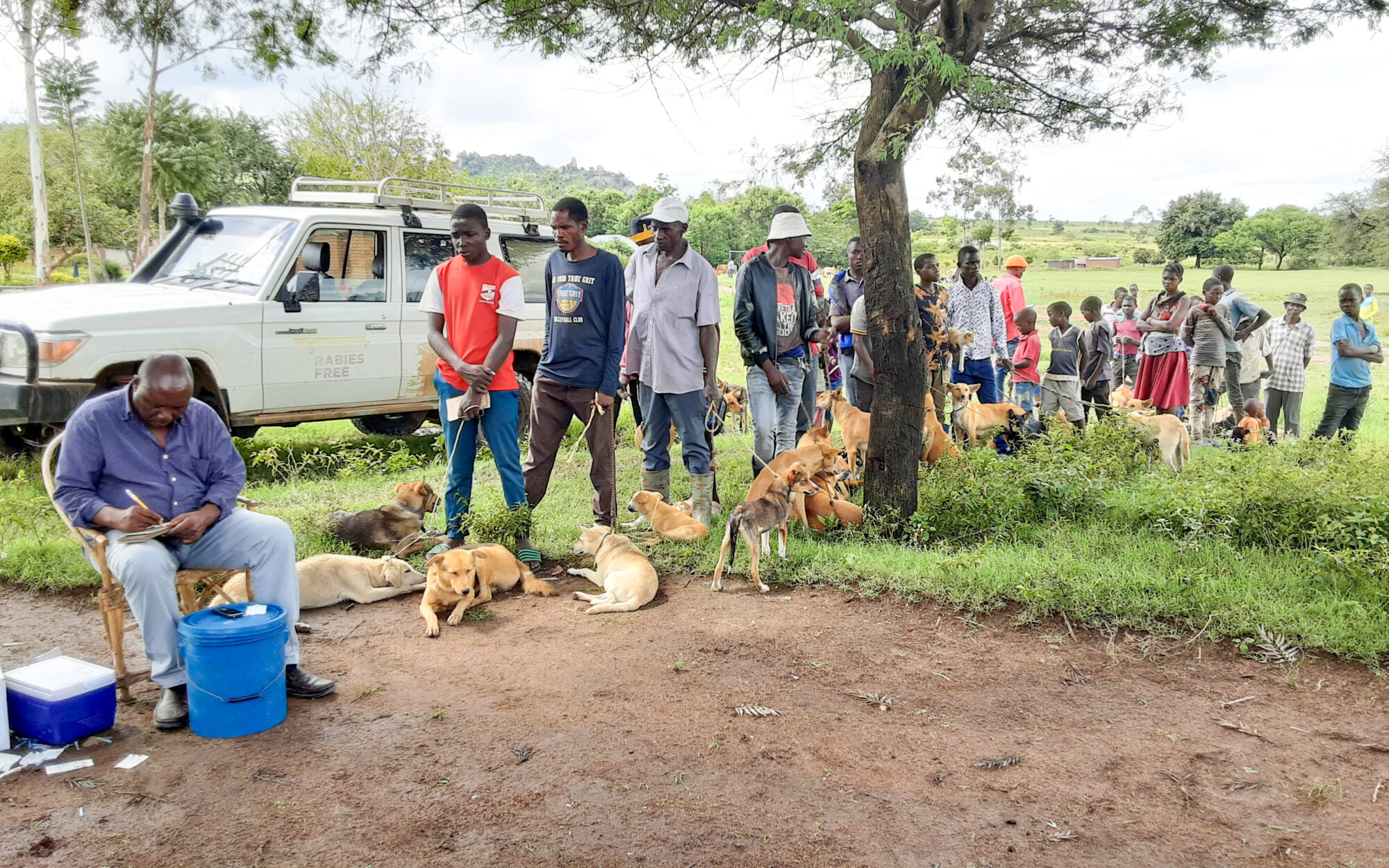
“For every 3,000 dogs that we vaccinate, we estimate that saves one child’s life. So that’s really cool. It’s approximately a dollar a dog or $1.50 (to vaccinate). So it’s approximately $3,000-$4,000 for every child’s life saved, which is really not a lot of money,” he said. “Compare that to malaria or cholera or other public health diseases, (which have) a much greater expense per life saved than this relatively cheap return.”
Of course, the impact on families is immeasurable. Lankester hears many heartbreaking cases, like when a rabid dog bites a child, so a parent walks for a day or two to a clinic to get the rabies vaccine—only to find there aren’t any available, or are mistakenly given tetanus or a different vaccine, and the child develops rabies and dies.
Rabies vaccines for humans involve four doses that cost $100, which can be two to three months’ salary for a parent, he noted. So when children are exposed to a suspected rabid dog, parents can face a heartbreaking choice of risking not vaccinating their child and hoping the dog wasn’t rabid or spending money and later learning the dog didn’t have rabies.
“There was one example of a mother of five children. They adopted a young puppy and the puppy ended up dying of rabies. They’d all been exposed, but she could only afford enough vaccination for one course. So she had this terrible dilemma. Do I treat all of my children once with one dose when four doses are needed? Or do I give one of my children a complete dose and protect that child? That’s the sort of terrifying dilemma you face,” he said. (She gave each child one dose, and fortunately, they all survived.)
Rabies Free Africa partners with animal hospitals across North America that donate $1 for every rabies vaccine administered to dogs in their practice (see sidebar) to go toward vaccination campaigns in Africa.
Lankester and his team are also developing dog facial recognition technology to identify dogs who have already been vaccinated for rabies—a cheaper, more effective method than microchipping, collars, or tattoos (which have welfare and time implications).
“It could be a game changer,” he said. “I just need to get about $100,000 to take it to the next level and work on getting the technology put onto a device so it can be used offline.”
So there’s a persistent need for both donors and volunteers. New Jersey-based veterinary assistant Warda El Akkari, MPH, found volunteering in Mumbai earlier this year with Mission Rabies made her even more passionate about her career in veterinary medicine.
She’s studying to become a Certified Veterinary Technician while working as a scientific marketing affairs specialist at Merck Animal Health, which donates rabies vaccines to both Mission Rabies and Rabies Free Africa. In India, she met many veterinary professionals who volunteer overseas every year, as she hopes to, too.
Rabies is the global health tragedy that only veterinary medicine can end.Felix Lankester, PhD
Rabies Free Africa
“Being in a foreign place without knowing anyone, it was very comforting to find myself surrounded by other like-minded people who share the same passions for travel and animal welfare,” she said. “I’ve done a few of these animal welfare trips, and I still keep in touch with people from all over the world.”
She felt a strong camaraderie with fellow volunteers on her most recent trip and loved that even after a 10-hour day, if her group saw other unvaccinated stray dogs, they’d stay late to vaccinate as many dogs as possible.
“It really just speaks volumes about how passionate everyone really is about this cause,” she said. “Eradicating rabies isn’t only going to help the areas where it’s endemic. It’s going to make for a better world for anyone who inhabits this planet.”
For every 3,000 dogs that we vaccinate, we estimate that saves one child’s life.Felix Lankester, PhD
Rabies Free Africa