Clinical
Preparing to Answer the Call
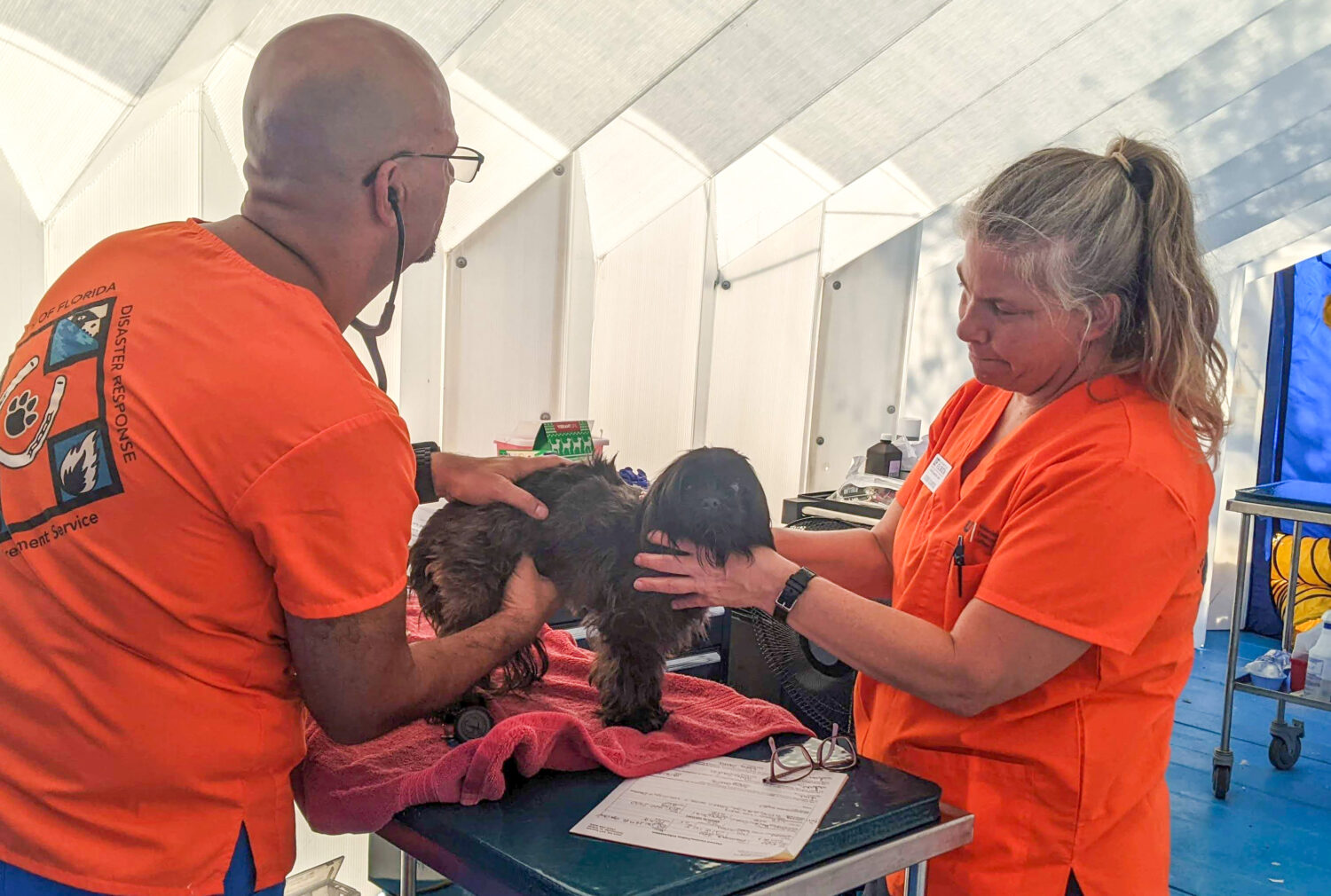
With natural disasters increasing in frequency and intensity, veterinarians must be prepared to respond more than ever. From university-based emergency response teams to local volunteer corps, there are many ways veterinarian professionals are getting trained and involved to tend to animals in times of extreme distress.
Caring for Sick and Injured Animals During Disasters
According to the National Oceanic and Atmospheric Administration (NOAA), 28 major natural disasters occurred in the United States in 2023 and 11 in 2024. These historic, billion-dollar, climate change– related weather events included severe storms, floods, wildfires, and heat waves, likely to become even more severe in the future.
Pets, working animals, and farm animals face displacement, extreme stress, starvation, injuries, and illnesses during disasters. In these catastrophes, federal, state, and county response teams come together to provide relief and shelter and perform search and rescue or recovery operations.
Advertisement
But who is caring for the sick, injured, and anxious animals? With natural disasters increasing in frequency and intensity, veterinarians must be prepared to respond more than ever.
From university-based emergency response teams to local volunteer corps, there are many ways veterinary professionals are getting trained and involved to tend to animals in times of extreme distress. For many, it’s a calling more than an obligation, and one that is extremely rewarding.
Role of University-Based Veterinary Emergency Teams
Hurricane Katrina was a wake-up call for Debra Zoran, DVM, PhD, DACVIM, professor at Texas A&M and director of the university’s Veterinary Emergency Team (VET).
In 2005, no laws required—or even allowed—first responders to evacuate people with their animals. “There were lots of people and animals that went through a lot of really tough stuff because there were no plans in place for sheltering them,” Zoran said. “As an animal person, I would not have gotten in a boat without my animals.”
When Hurricane Ike hit Galveston two years later, Texas decided to build a medical response team to help injured animals. As a long-time volunteer for the Texas Task Force 1 Urban Search and Rescue, Zoran got involved, but it wasn’t until 2010 that the VET team was officially established.
It has since become the country’s leading, largest, and most sophisticated veterinary response team, deployed to 27 disasters throughout Texas and across the country. They provide medical support to companion animals, farm animals, and working dogs during natural and human-made disasters. The team, which includes staff from Texas A&M’s School of Veterinary Medicine and Biomedical Sciences, works at the request of the Texas A&M Task Force or county jurisdictions, deploying when needed and training future veterinarians in emergency preparedness and response.
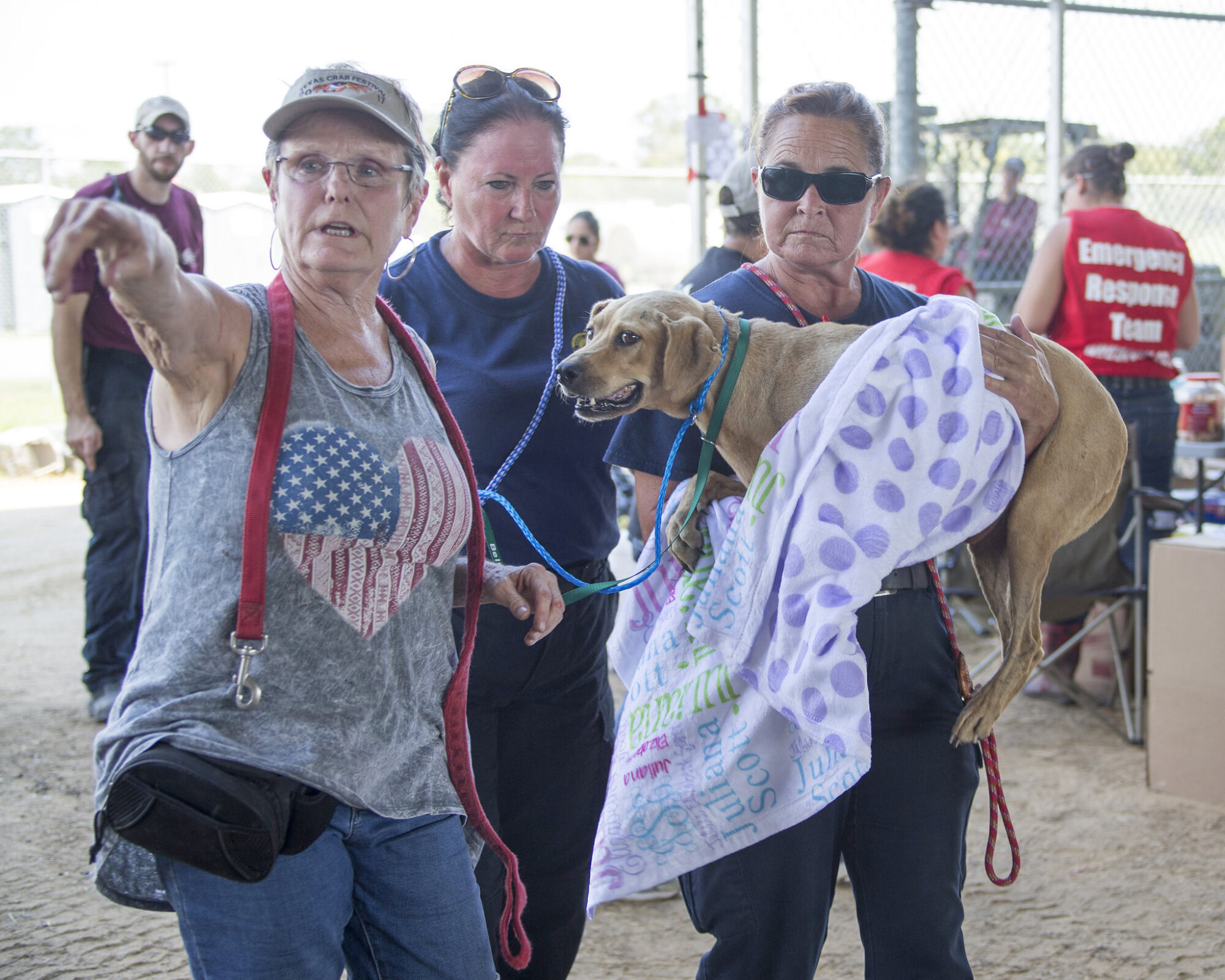
“Animals that are in emergency shelters are very stressed, even if they’re with their owners,” Zoran said. “They’ve often just been evacuated out of a scary situation, whether a flood or a fire, and they’re in a strange place. Our role is to support the medical care needs of sheltered animals that are impacted.”
In a recent wildfire in the Texas Panhandle, the team, equipped with medical and service trailers, triaged 700 cattle and treated 271 animals for respiratory issues and injuries, providing food for calves whose mothers were killed in the fires. Because teaching hospitals and colleges of veterinary medicine have the inventory needed to provide medical support in disasters, similar teams are found in other universities.
The California Veterinary Emergency Team (CVET), administered by the UC Davis One Health Institute within the School of Veterinary Medicine, comprises dedicated disaster responders. Operational for a little over a year, it offers the necessary resources for professionals and organizations, helping pets and livestock during natural disasters, primarily wildfires, with the aid of 200 volunteer responders across the state.
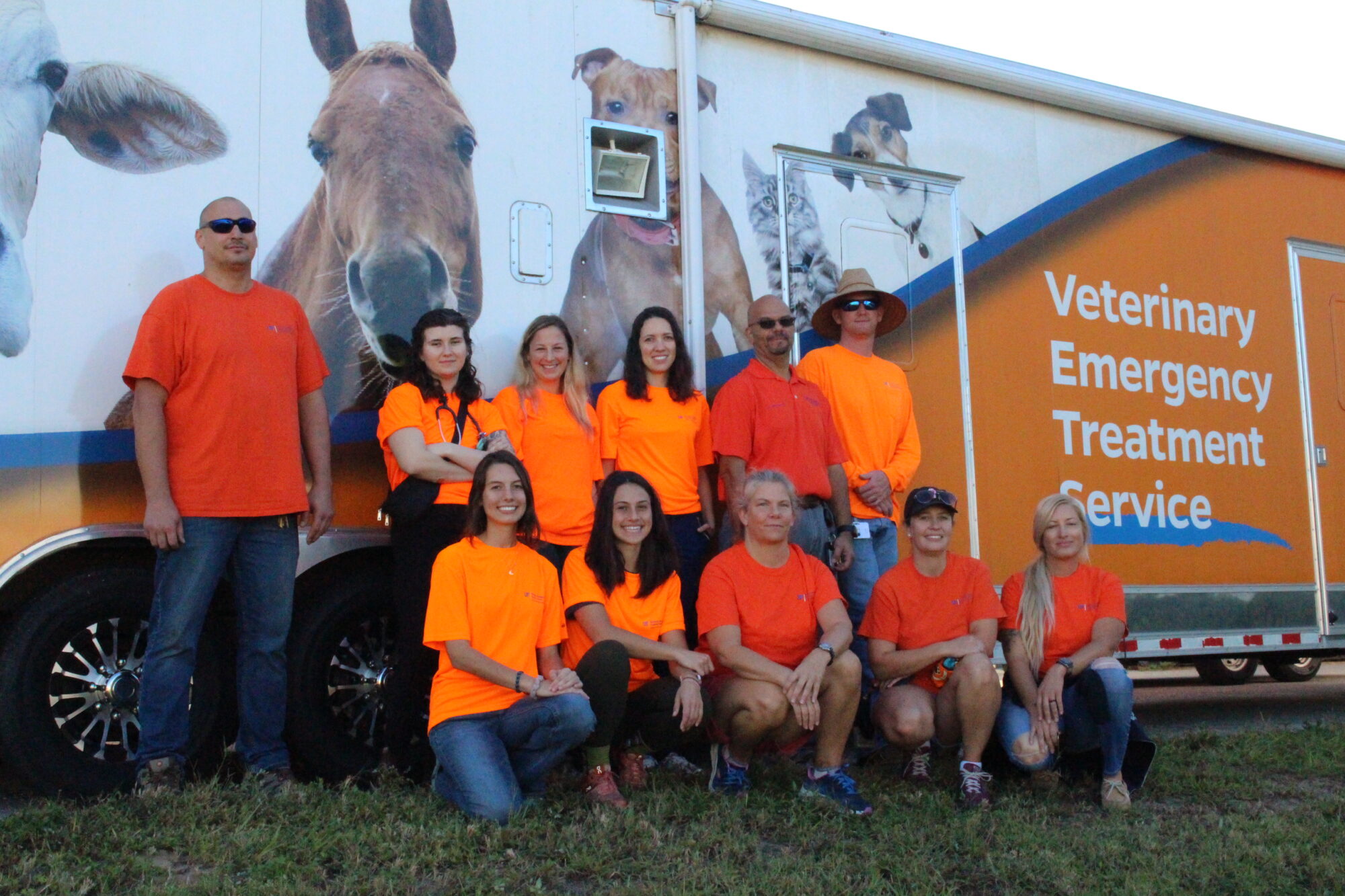
The University of Florida’s Veterinary Emergency Treatment Service (VETS) has been assisting with hoarding cases, hurricanes, oil spills, and other emergencies since the early 2000s. VETS is a member of the Florida State Agricultural Response Team (SART) and works in partnership with the Florida Veterinary Medical Association (FVMA), the Florida Department of Agricultural and Consumer Services, and the Florida Veterinary Corps.
“In most cases, they bring us into areas where all infrastructure is gone, when veterinary practices have no power, no water, no ability to function,” says Lawrence Garcia, MS, DVM, medical director of VETS. During a deployment, the team arrives in self-sustained trucks and trailers, fully supplied with water, fuel, food, and everything they need to sustain themselves for their stay.
The team’s 42-foot medical unit is equipped for surgery and works as a hospital. After Hurricane Ian, VETS stayed in Fort Myers for 10 days, where more than 60 volunteers saw 400 animals, many with serious medical issues.
Helping Federal K-9 Responders Federal canine teams specialize in two key areas: detecting survivors (live find search) and detecting deceased individuals (human remains detection).
Currently, there only about 100 human remains detection K-9 responders and between 300 and 400 live-finding K-9s for the entire country in the federal system, according to Zoran.
The reality is that when federal teams deploy to disaster areas, there isn’t a veterinarian on board to care for the working dogs in the event of injuries. This led to Texas A&M VET’s other primary mission—to help the Texas Task Force 1 working dogs so they can stay healthy during search and rescue/recovery operations.
“When we went to Bastrop [during the wildfire in 2011], we were there first and foremost to support those working dogs because, in fires, one of the greatest risks they have is their feet because the ground is burned,” said Zoran. “One of the first things we did was develop a wrapping system for dog feet that would allow them to continue to move their feet because they have to have that for stability, but still protect those pads from the hot embers.”
To better serve federal K-9s that deploy to various parts of the country, Texas A&M VET hopes to establish a nationwide veterinary network of teams with the help of federal funding.
The goal is to invest in education and outreach in the eastern, central, and western regions, with these teams supporting local governments and nonprofits to aid in recovery efforts and assist working dogs during disasters. The Homeland Security subcommittee of the House Appropriations Committee will review the funding request in 2025.
Being Prepared for Disasters A large part of the university emergency response teams’ work is outreach and education. “For most disasters, the response starts locally, so what we try to do is have veterinary practices have a disaster plan that includes how to keep their business operating,” said Garcia.
Garcia worries that there’s not as much preparation as there should be for the number of storms that hit Florida. Many practices don’t think to check if their building is up to code, if they are in a flood zone, what level of storm their clinic can handle, how close they are to storm surge, and if they even have the right insurance, he adds. “Everybody has electronic records now,” Garcia said. “What happens when there’s no internet? There are ways to back up and have safe ways to access that information if infrastructure is lost for an extended period.”
As the FVMA committee chairman and an advocate of preparedness, Terry Clekis, MS, DVM, says his goal is to prepare veterinarians, their families, employees, and clients for continuity of operations. “When all these things are set, they can give back to their community,” Clekis said.
In his volunteer role, he is responsible for ensuring that veterinary hospitals have a plan of action through continuing education in the event of a disaster to be “prepared for their business, their employees, and their patients.”
The American Veterinary Medical Association (AVMA) provides valuable emergency planning resources for veterinary practices, including a downloadable guide to writing a disaster/emergency plan, conducting a business impact analysis, continuing education on disaster and business continuity planning, and a Disaster Business Continuity certificate program, among others.
In addition to university courses for veterinary students, UF VETS started adding a disaster track at conferences around the state to reach practicing veterinarians. “If you are already getting continuing education somewhere, you can pick up some more,” Garcia said.
He further suggests contacting State Agricultural Response Teams and veterinary medical associations, which offer numerous resources. Veterinary emergency teams at universities are helping students prepare for common disasters that they experience in their regions.
Texas A&M has a formal, built-in disaster rotation within the curriculum to prepare students, while UC Davis has SVERT, the Students for Veterinary Emergency Response Team. Becoming a Disaster Responder When a disaster hits, help from local veterinary practices is critical. Many response teams, including the university emergency teams, rely on volunteers from private practice veterinarians and technicians to administrative staff, but those willing and able to help must be prepared by taking the necessary courses.
“Before we take somebody into a disaster-impacted area, we have to know that they are aware and safe and prepared,” Garcia said. This includes bringing medications and tools needed to survive, knowing the language used in disaster response, and being mentally prepared. “You are going into areas and talking to people that have lost everything, and they tell you their story in detail,” he added. “You can’t help but kind of take that on and feel their pain. It’s definitely not for the faint of heart, but it’s also important because it means the world to the people you are helping.”
To be a disaster responder, emergency teams require that licensed individuals take FEMA’s Incident Command System training courses, such as CS-100: Introduction to the Incident Command System; ICS-200: ICS for Single Resources and Initial Action Incidents; IS-700: National Incident Management System, An Introduction; and IS-800: National Response Framework, An Introduction.
Additional courses covering an introduction to hazardous materials (IS-5a), livestock in disasters (IS-111), community planning (IS-11.a), and awareness and preparedness (IS-10.a) may also be required. The UF Institute of Food and Agricultural Sciences (IFAS) Center for Public Issues Education offers a free two-and-a-half-hour online Disasters & Mental Health training course.
Veterinarians and students who have taken disaster and emergency response courses offered by veterinary institutions and other organizations and satisfied all core competencies required to respond to disasters can also qualify for the AVMA Veterinary First Responder Certificate Program.
In 2022, Texas A&M became the first university to graduate veterinarians with a new certificate from AVMA to assist in disaster situations. In California, CVET requires the CVET Basics course, which provides an overview of the team’s operations, how the responder fits within the team, general hazardous awareness, and fire-safety courses.
“If people want to be more involved in the field, like helping with evacuations or technical animal rescue, we’re developing mission-specific training for higher levels of training for those folks,” said Ashley Patterson, MPH, DVM, associate director of operations at CVET.
Claudia Sonder, DVM, president of the Napa Community Animal Response Team (CART), says CVET has been an invaluable resource for veterinarians and community volunteers. “They are actually providing training materials for pet owners or CART volunteers so that they are better at assessing an animal and deciding if that animal needs to see a veterinarian and if it is safe to transport,” Sonder said.
Giving Back to the Community
Although the work the university teams do in response to disasters is compensated, most of those on the front lines are volunteers. “I love my clients, and I love my community. The thought of my long-time clients and patients being in harm’s way and doing nothing was unacceptable to me,” Sonder said.
For this long-time volunteer, the ability to be a community leader and to make a difference is gratifying on multiple levels. “It pays dividends in the recovery after a disaster because people have their animals, and their animals are healthy,” she said. “They’ve just lost everything and don’t have to pay a $2,000 vet bill.”
The people in the Napa community appreciate Sonder’s work, and she says they support her during peacetime and nondisaster times. “They’re there filling up our schedule book. So, for me, it’s been a no-brainer.” Before heading out there to be a disaster service worker, there may be some apprehension about treating injuries that aren’t typically seen daily, like advanced burns.
“Disaster medicine is not very different from field medicine,” Sonder says. “It’s all the same things: lacerations, eye injuries, lamenesses, colics.” In the event of a more advanced case, the patient is taken out of the shelter and referred to a specialist. “Don’t be intimidated by the fact that it’s a disaster,” she said. “You are actually going out there and doing the good work that you do every day.”