2024 AAHA Community Care Guidelines for Small Animal Practice
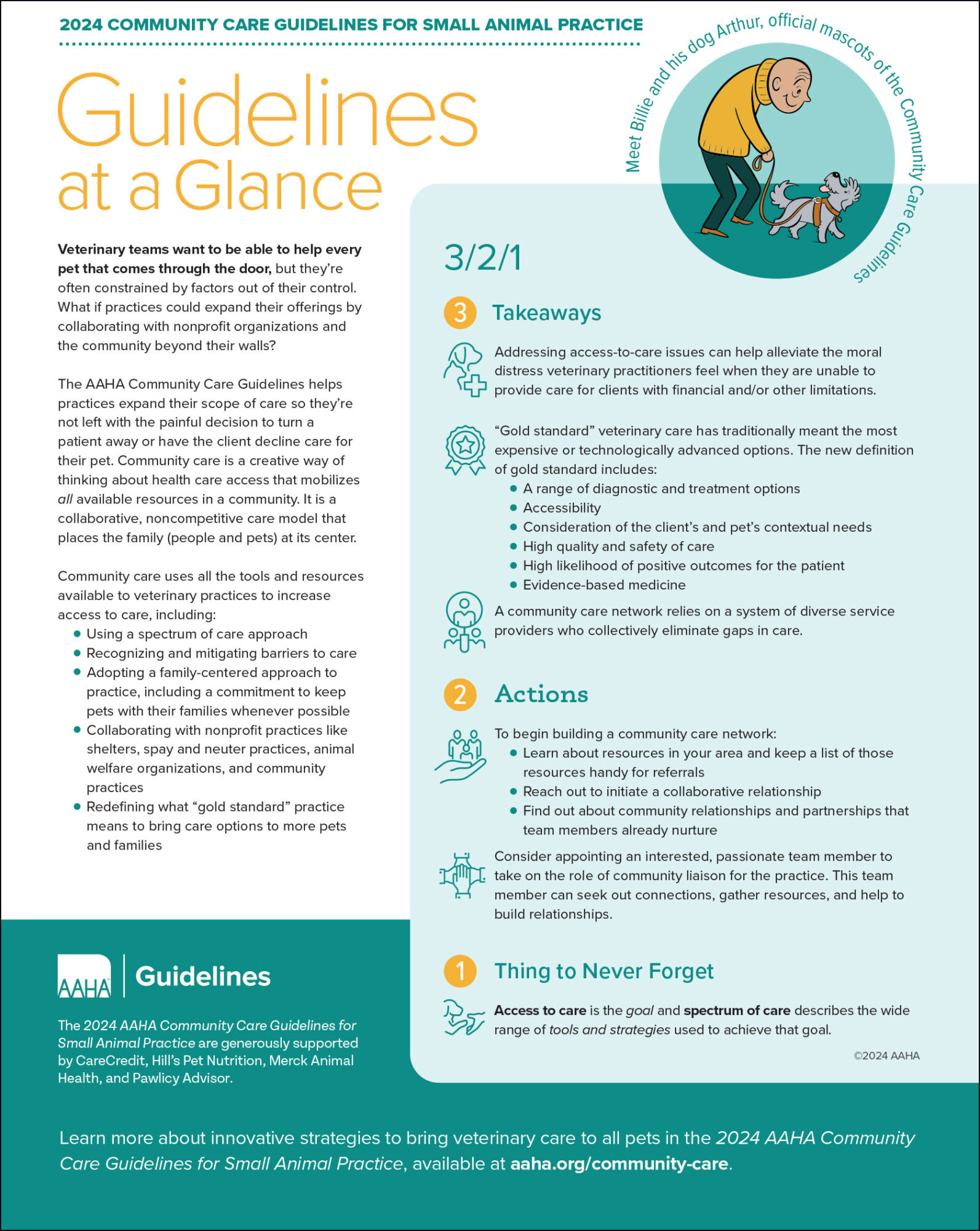
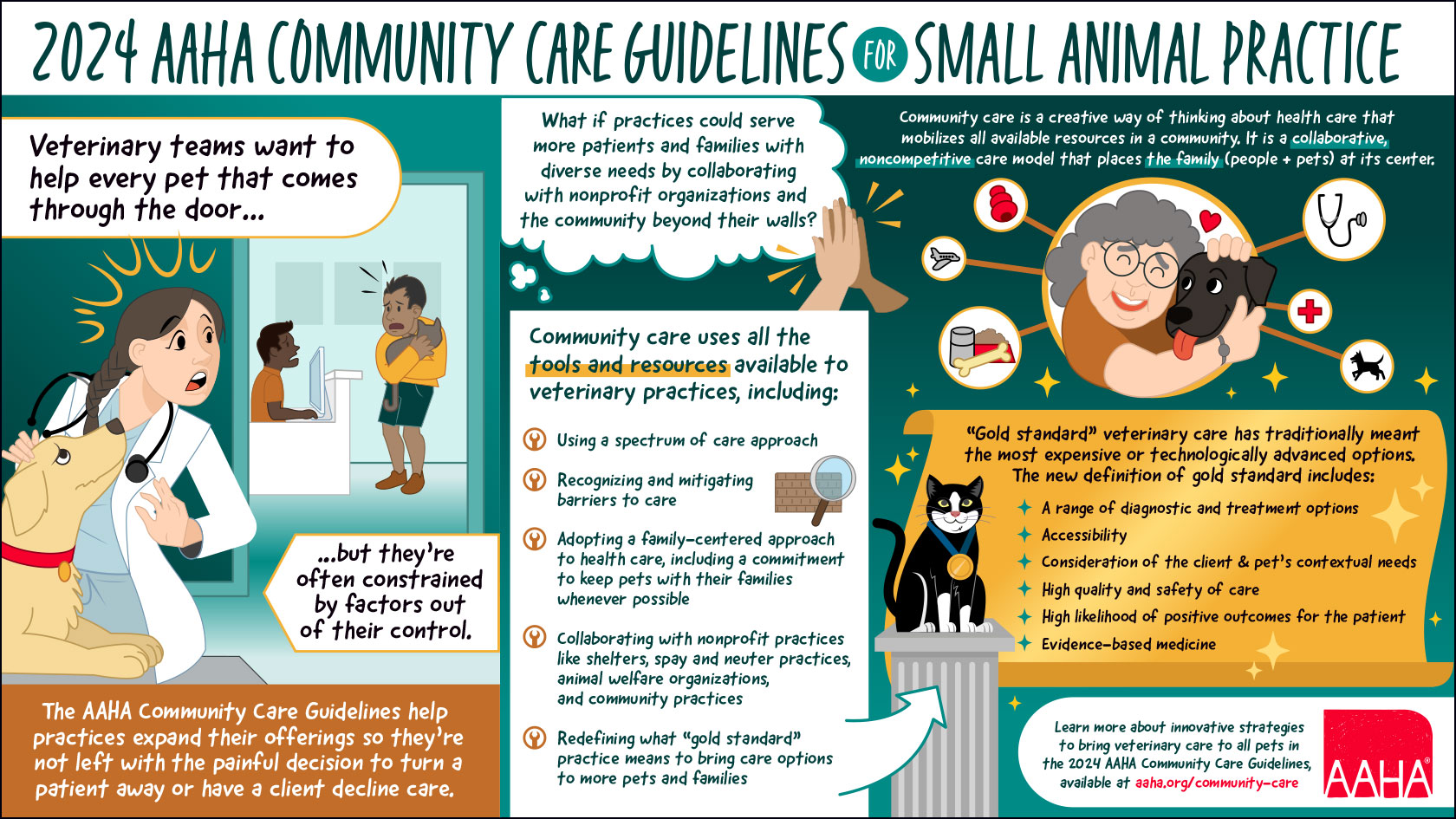
Veterinary teams want to be able to help every pet that comes through the door, but they’re often constrained by factors out of their control. What if practices could expand their offerings by collaborating with nonprofit organizations and the community beyond their walls?

The AAHA Community Care Guidelines helps practices expand their scope of care so they’re not left with the painful decision to turn a patient away or have the client decline care for their pet. Community care is a creative way of thinking about health care access that mobilizes all available resources in a community. It is a collaborative, noncompetitive care model that places the family (people and pets) at its center.
Community care uses all the tools and resources available to veterinary practices to increase access to care, including:
- Using a spectrum of care approach
- Recognizing and mitigating barriers to care
- Adopting a family-centered approach to practice, including a commitment to keep pets with their families whenever possible
- Collaborating with nonprofit practices like shelters, spay and neuter practices, animal welfare organizations, and community practices
- Redefining what “gold standard” practice means to bring care options to more pets and families
3 Takeaways
Addressing access-to-care issues can help alleviate the moral distress veterinary practitioners feel when they are unable to provide care for clients with financial and/or other limitations.
“Gold standard” veterinary care has traditionally meant the most expensive or technologically advanced options. The new definition of gold standard includes:
- A range of diagnostic and treatment options
- Accessibility
- Consideration of the client’s and pet’s contextual needs
- High quality and safety of care
- High likelihood of positive outcomes for the patient
- Evidence-based medicine
A community care network relies on a system of diverse service providers who collectively eliminate gaps in care.
2 Actions
To begin building a community care network:
- Learn about resources in your area and keep a list of those resources handy for referrals
- Reach out to initiate a collaborative relationship
- Find out about community relationships and partnerships that team members already nurture
Consider appointing an interested, passionate team member to take on the role of community liaison for the practice. This team member can seek out connections, gather resources, and help to build relationships.
1 Thing to Never Forget
Access to care is the goal and spectrum of care describes the wide range of tools and strategies used to achieve that goal.

AAHA welcomes endorsement of these Guidelines by the Association of Shelter Veterinarians (ASV).
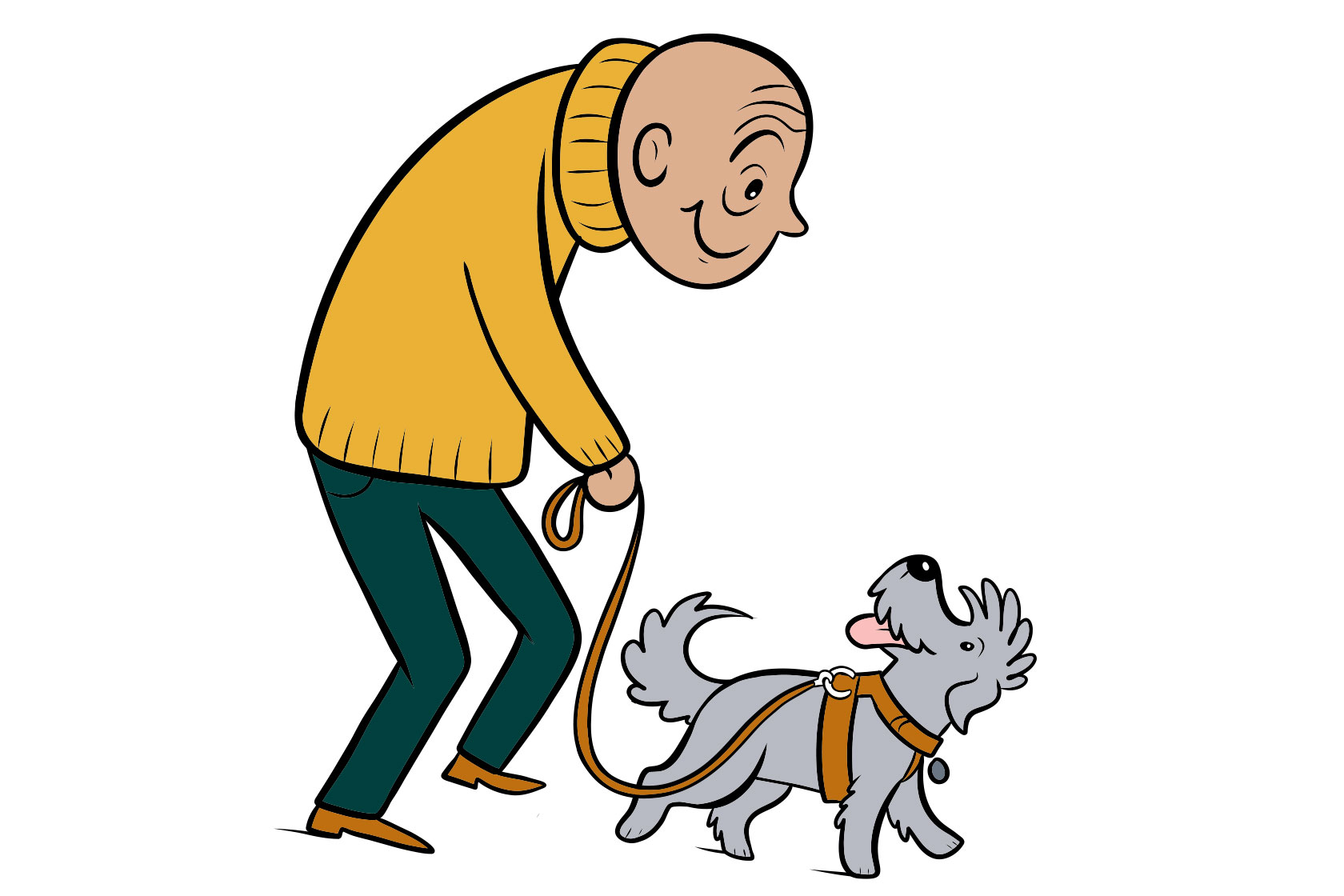
Meet Billie and his dog Arthur, the guidelines mascot!
Billie and Arthur are our mascots for the 2024 Community Care Guidelines, designed by artist Lili Chin.
The 2024 AAHA Community Care Guidelines for Small Animal Practice are generously supported by CareCredit, Hill’s Pet Nutrition, IDEXX, Merck Animal Health, and Pawlicy Advisor.