How to Have a Pet-Safe Halloween
Halloween is fun for kids and adults, but can be stressful and potentially dangerous for pets. Toxic foods, loud noises, escape potential, and restrictive costumes can contribute to a less-than-ideal evening for your furry pal. Let’s discuss some potential hazards and steps you can take to provide a pet-safe, fun Halloween evening.
1. Toxic foods
The biggest Halloween danger for pets is the accessibility to candy and chocolate. Chocolate is toxic and particularly dangerous to dogs, although cats are sometimes also affected. The sweet treat contains methylxanthines, compounds that irritate the nervous system and can lead to hyperactivity, seizures, or death, in severe cases. Other foods to keep away from pets on Halloween include:
- Xylitol — This artificial sweetener, often found in sugar-free candy and gum, causes a spike in insulin and a subsequent drop in blood glucose and can also damage a pet’s liver.
- Raisins — These dried versions of grapes contain tartaric acid, a compound that can cause kidney failure in dogs.
- Candy wrappers — Foil, plastic, and wax paper can get stuck in a pet’s intestinal tract and cause a life-threatening blockage.
2. Accidental pet escapes
Continuously opening and closing your front door to greet trick-or-treaters gives eager pets the opportunity to slip outside, become frightened, and get lost or injured. Use barriers, such as crates, doors, or baby gates, to keep pets safely indoors.
Advertisement
If your pet gets upset when strangers approach the house, consider not participating in trick-or-treating and turn off outside lights or post a sign. To participate in the fun without stressing your pet, sit at the end of your driveway with a candy bowl instead of waiting for trick or treaters inside. You can also create a safe, quiet retreat indoors with your pet’s favorite toys, bedding, and treats.
Ensuring pets have current identification tags and a microchip will increase their chances of being returned safely should they manage to escape, despite appropriate precautions.
3. Pet stress and anxiety
Halloween’s unfamiliar sights, sounds, and smells can overwhelm and frighten pets. Music, costumes, crowds, and decorations intended to scare young humans can make pets uncomfortable and cause anxiety or stress. Constantly ringing doorbells or door knocking can also trigger anxiety or territorial barking.
Keeping pets calm is an essential part of a pet-safe Halloween plan. Preventing exposure to their biggest triggers, such as noise, the doorbell, or strangers, can help them relax. For some pets, the same techniques to prevent escapes can help keep them quiet and calm. Provide reactive pets with a quiet space insulated from noise. Play calming music or white noise, use calming pheromones, or wrap your pet in a calming vest. If you anticipate serious distress, ask your veterinarian about over-the-counter or prescription anti-anxiety aids that will help your pet relax.
4. Pet costume dangers
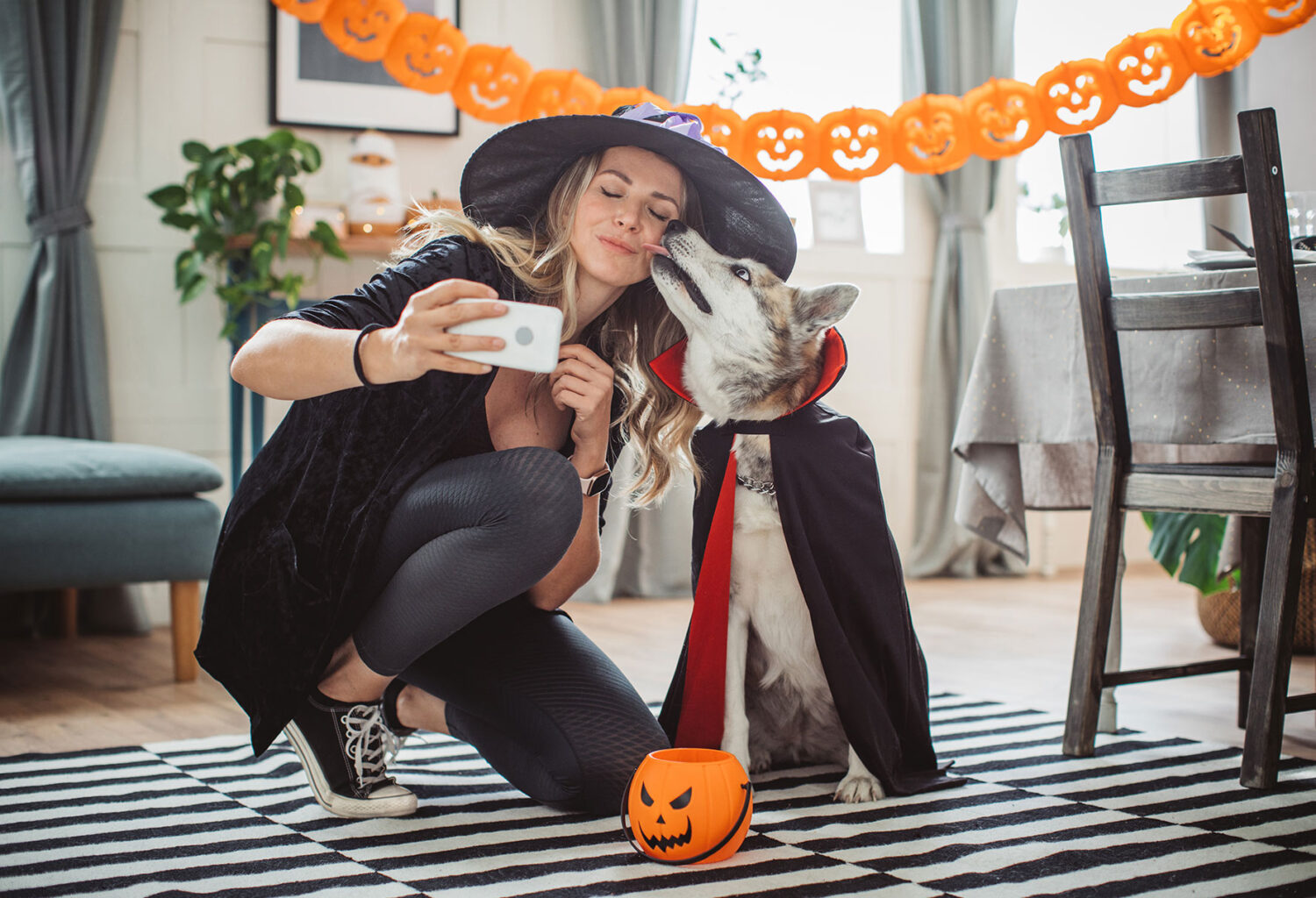
Pet Halloween costumes can be irresistibly adorable, but not all pets enjoy wearing them. Restrictive or uncomfortable costumes especially can cause distress, and some costumes pose chewing or choking hazards. Only pets accustomed to clothing should wear costumes, which should be made with soft fabrics that won’t irritate their skin, and should not restrict movement, breathing, or vision. Always supervise your furry pal to ensure they don’t get stuck or try to eat their outfit.
5. Disastrous decor
Pets like to investigate anything new in their environment, which includes Halloween decorations. Some may frighten your pet, while others can be dangerous. Carefully consider your decoration types and where you put them to ensure a pet-safe Halloween decor experience. Common decorations and their potential hazards include:
- Jack-o’-lanterns — Pets can knock over pumpkins with lit candles and cause a fire.
- Hanging decorations — Hanging decorations, cobwebs, string lights, and loose accessories like rubber spiders or bats can pose choking, strangulation, or intestinal obstruction hazards if your pet plays with them.
- Electronics — Halloween lights and animatronics often require extension cords. Pets who chew on live wires can be burned or shocked and potentially start a fire.
- Glow sticks — Glow sticks aren’t toxic, but can cause mouth irritation, drooling, and vomiting if ingested. Also, the plastic pieces from glow sticks can cause intestinal issues.
Halloween is a spooktacular fun time for people, but you should take precautions to ensure your pets have a good time, too. Preparing in advance, creating a secure indoor space, and being mindful of treats and costumes can prevent common Halloween mishaps.
Contact your AAHA-accredited veterinarian for more information and tips on creating a pet-safe Halloween.